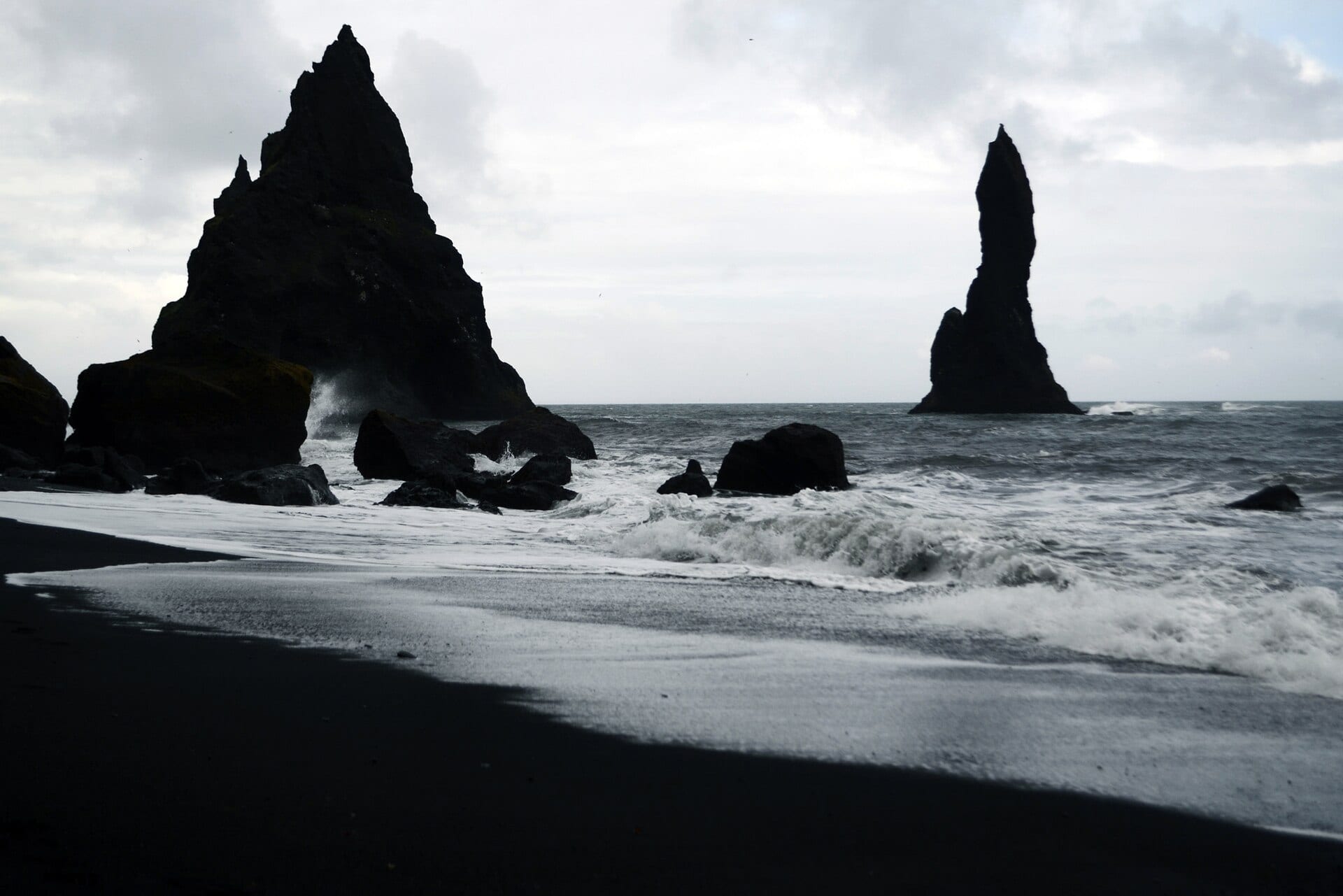
Reynisfjara sits about five kilometres west of the village of Vík í Mýrdal, and it is one of the most visited coastal spots in Iceland for good reason. The beach is raw, elemental, and genuinely impressive in a way that does not depend on perfect weather or seasonal timing. Come in July sunshine or November overcast, and the place holds its weight.
Why it’s worth the trip
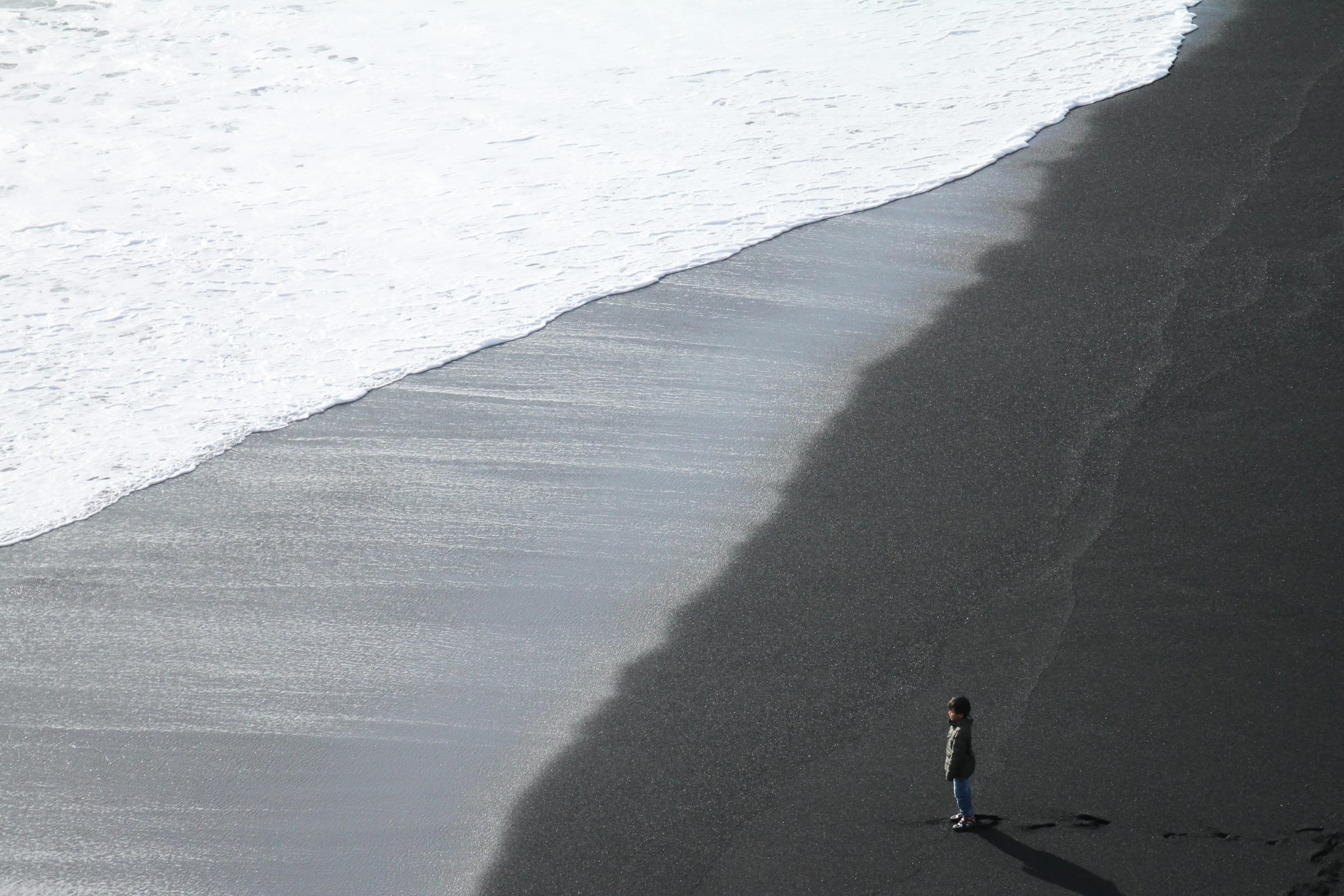
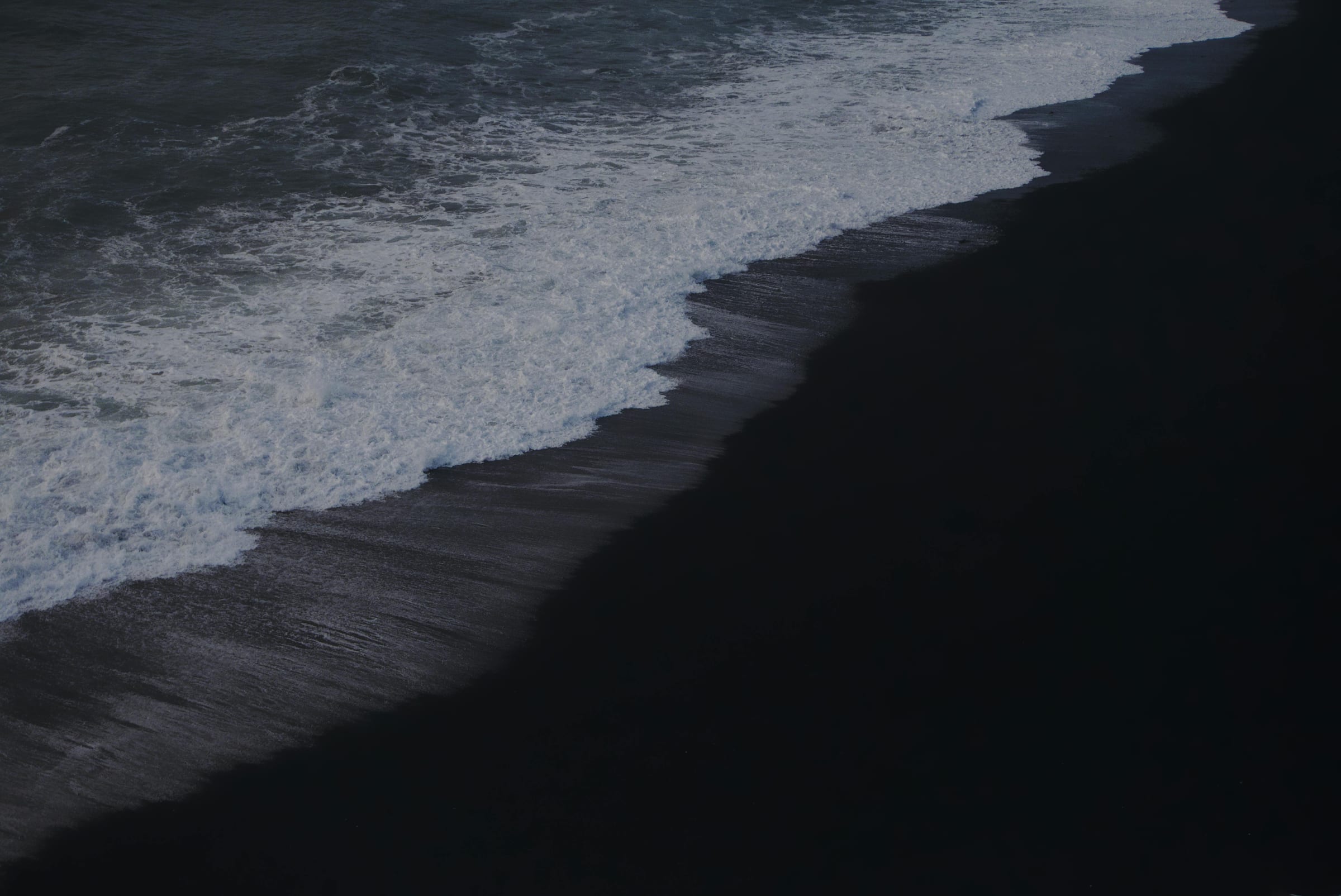
The sand here is not merely dark. It is black in the way volcanic material is black: dense, fine-grained basalt ground down by centuries of Atlantic surf, and it sits wet and heavy against the foot even on dry days. The contrast between that sand and the white foam of the waves is stark and visual in a way that photographs cannot entirely capture.
The main geological draw is Reynisdrangar, a cluster of basalt sea stacks rising from the surf just offshore. They reach roughly 66 metres at their highest point and are attributed in local folklore to trolls caught by the rising sun, frozen mid-attempt to drag a ship ashore. Whether or not you find the legend appealing, the stacks themselves are arresting. They change character depending on light and swell. On calm mornings they sit clean against a grey sky. In heavier weather the surf breaks around their bases in chaotic white fans.
Along the western edge of the beach, the cliff face of Reynisfjall holds a series of basalt column formations that are worth close inspection. These hexagonal columns form when lava cools slowly and contracts, fracturing along geometric lines. The columns here are tightly packed and extend in layered patterns, some vertical and some fanning outward in what geologists sometimes call a “basalt organ” formation. There are cave alcoves at the base of the cliff where the columns create shallow overhangs. You can walk into them at low tide, though the ground is uneven.
Puffins nest in the cliffs above the caves during the breeding season, roughly April through August. They are small, fast birds and often ignored by visitors focused on the columns below, which is a shame because watching them land clumsily after a low flight over the surf is its own kind of entertainment.
How to get there
Reynisfjara is on Route 215, which branches south off the Ring Road (Route 1) a few kilometres west of Vík. The road is paved and straightforward. There is a car park at the beach with toilet facilities, and it fills quickly in summer. Arriving early in the morning or later in the afternoon distributes the crowd somewhat. The beach itself is a short walk from the car park, flat and easy underfoot.
No significant driving skill or four-wheel drive is needed. This is a standard passenger car route. If you are already driving the South Coast, Reynisfjara is a natural stop alongside Skógafoss, Seljalandsfoss, or the Dyrhólaey promontory, which sits just west of here and provides an elevated view over the entire bay including the sea stacks.
What to expect on arrival
The beach is wide and the walk from the car park to the water takes under five minutes. From there you can walk west toward the basalt cliffs, which takes another five to ten minutes depending on pace. The total area you can reasonably cover on foot is not large. An hour and a half is enough for most people to explore the cave alcoves, walk the length of the active beach, photograph the sea stacks from various distances, and spend some time watching the surf.
The single most important thing to understand before stepping onto this beach is the wave danger. Sneaker waves, also called sleeper waves, are a genuine and recurring hazard at Reynisfjara. These are large waves that arrive without the build-up visible in ordinary surf. They can reach far up the beach with no warning and have caused multiple deaths here. There are warning signs at the site and a clearly marked danger zone. The guidance is simple: stay out of that zone, watch the surf from a safe distance, and do not turn your back on the ocean. This is not alarmist language. It is the practical reality of the location.
The surf at Reynisfjara is powerful even on calm days. The Atlantic swells that arrive here have crossed an open fetch of thousands of kilometres. The beach faces south-southwest and catches the full force of whatever is running. Do not let fair weather make you complacent.
The cave alcoves and the base of the cliff are safer in terms of wave reach, but the ground is rocky and wet. Sturdy footwear helps. The black sand itself is not difficult to walk on when dry, but it becomes dense and heavy when wet and will coat waterproof boots with fine grit.
When to go
Reynisfjara is accessible year-round, and there is an argument for each season.
Summer (June-August) brings the longest daylight and the best chance of seeing puffins on the cliffs. The car park is busiest during these months. Going at 7 or 8 in the morning makes a real difference.
Spring and autumn offer softer light, fewer visitors, and more dramatic cloud formations over the mountains behind Vík. The surrounding landscape, which includes the flanks of the Mýrdalsjökull glacier to the north, can be striking in early morning autumn fog.
Winter visits are entirely feasible. Snow on the black sand is visually unusual and worth seeing. However, reduced daylight limits your window, and winter storms can make the wave hazard considerably more severe. Check the road and weather conditions through the Icelandic Met Office and the Safetravel website before going in winter months.
Tips and responsible-visitor notes
- Do not collect the black sand or basalt rocks. Removing natural material from Icelandic beaches is prohibited.
- The cave alcoves are popular photography spots. Be patient and you will have a few minutes without other people in the frame.
- Wind is common here, particularly in spring and autumn. A windproof layer is worth carrying regardless of the temperature.
- If you are visiting with children or elderly companions, brief everyone on the wave rules before approaching the water.
- Vík has fuel, food, and accommodation if you need to break a longer South Coast drive.
The beach asks for attention and some respect for the environment it sits in. It repays both.
.jpeg)