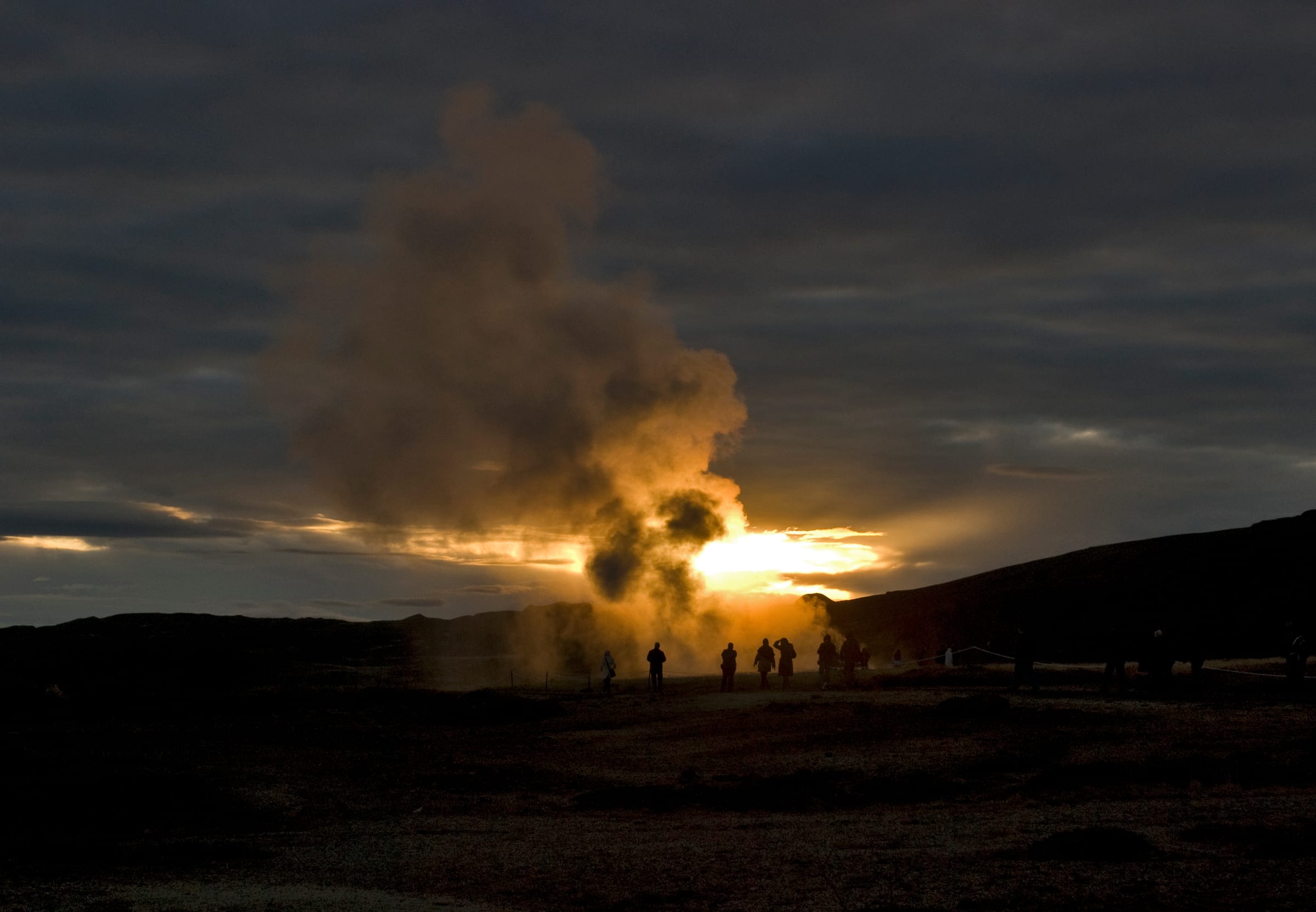
The word geyser exists in every language because of one place in Iceland. That fact alone gives Haukadalur a kind of geological authority that most natural attractions simply cannot claim. Strokkur, the active vent that most visitors come to watch, erupts reliably every five to ten minutes without requiring any ceremony or luck. You stand, you wait, you watch a column of boiling water punch skyward. Then it collapses, and you wait again.
Why it’s worth the trip
The original Geysir, from which the universal term derives, is largely dormant now. It can still erupt under certain conditions, including seismic activity, but you should not plan your visit around it. What you get instead is a geothermal field that functions as a compressed geology lesson: hot springs with vivid mineral colouring, bubbling mud pools, low fumaroles hissing at ground level, and the constantly active Strokkur at the centre of it all.
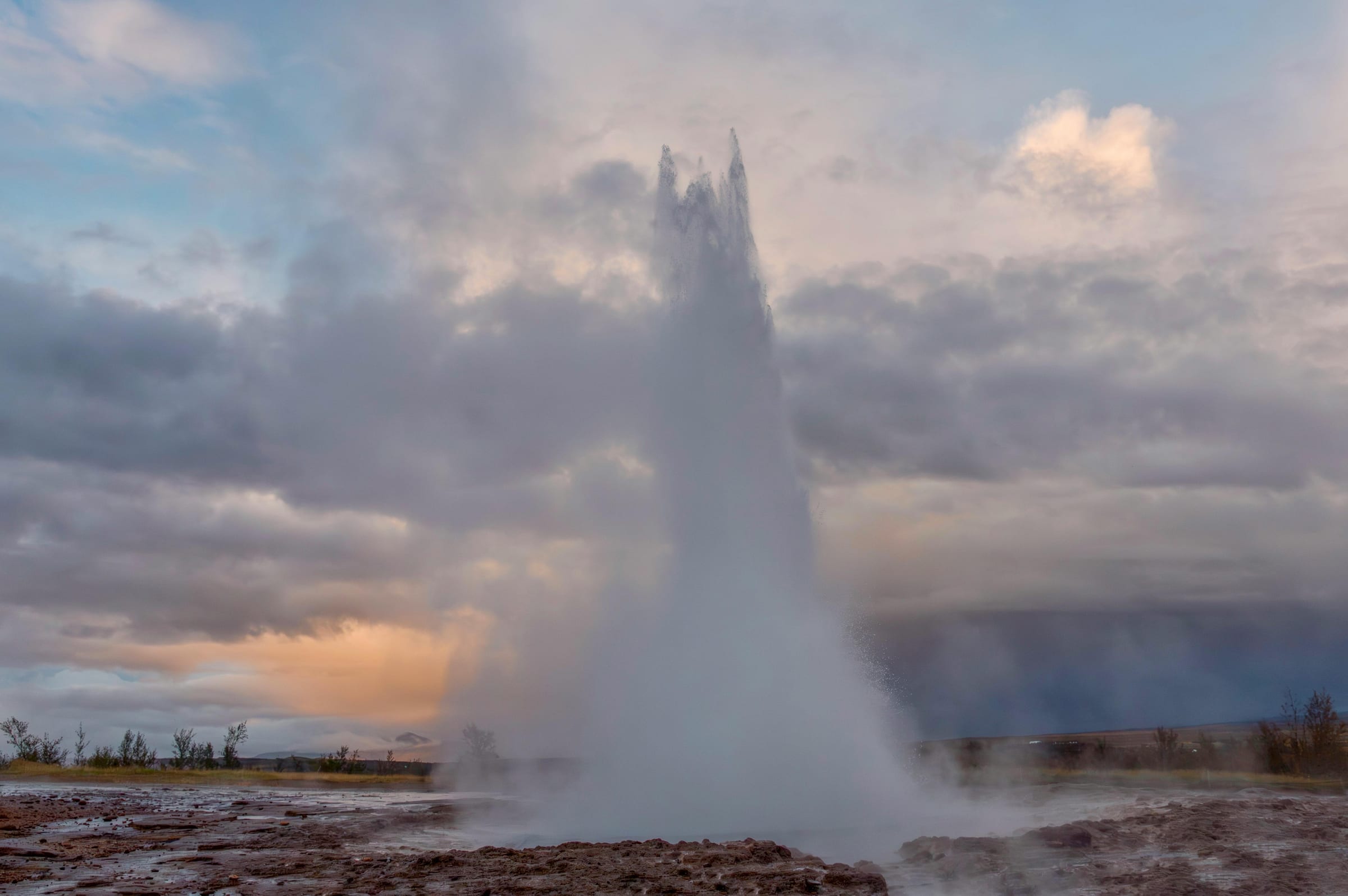
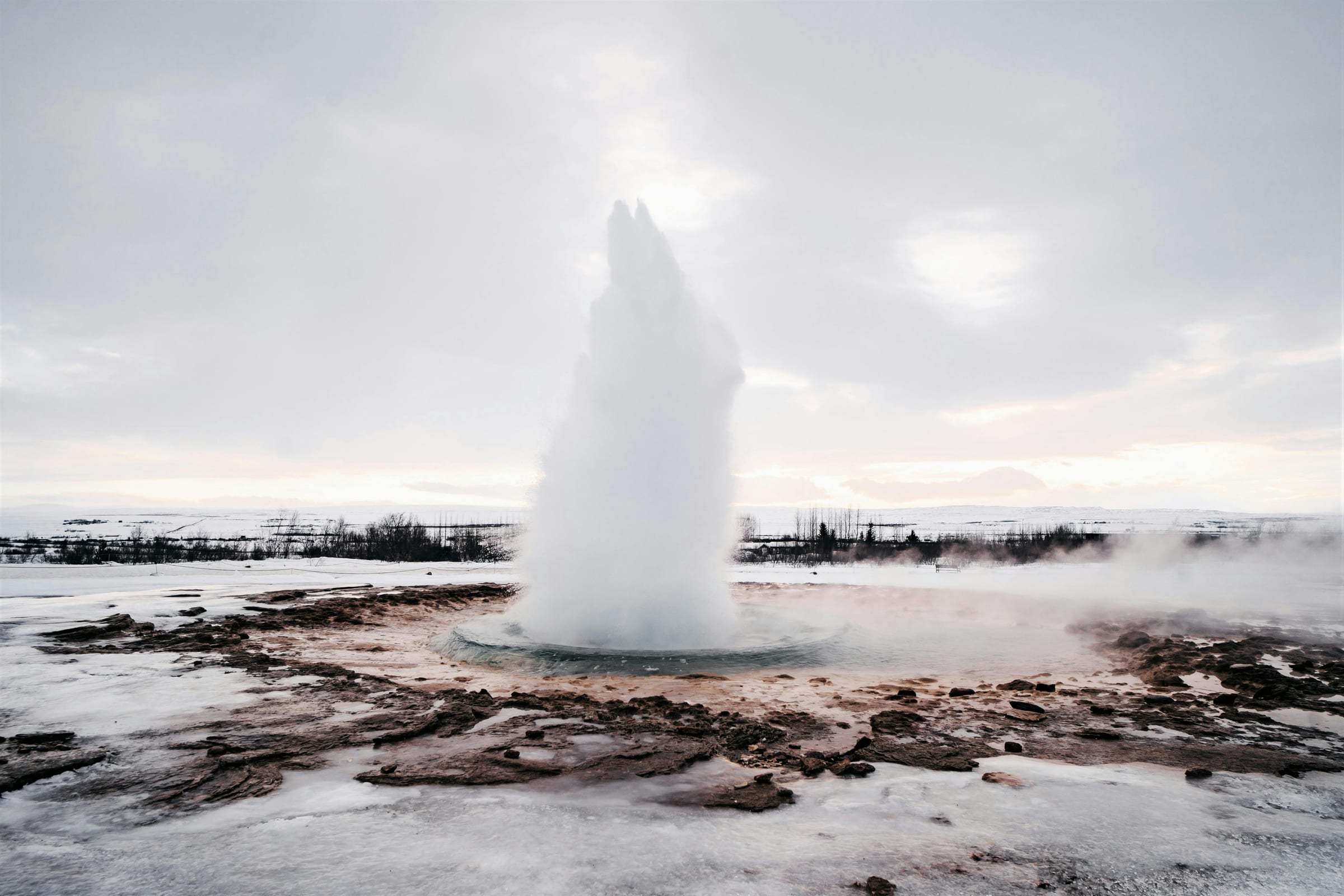
Strokkur erupts to heights that vary noticeably from one burst to the next. A modest eruption might reach fifteen metres; a stronger one can clear twenty-five or more. The water column rises, forms a dome of turquoise-blue water just before the burst, then launches upward in a fraction of a second. Steam follows immediately, and the whole event is over in seconds. The blue dome moment is what photographers position themselves for. That particular colour is real, not enhanced, and it appears only in the fraction of a second before the column breaks.
The broader field is worth more than a quick look at the main vent. The hot springs vary in temperature, mineral content, and colour from ochre to pale blue to near-white. Some are calm, mirror-smooth pools. Others churn constantly. The landscape is low and open, which means wind is a consistent factor and the smell of sulphur is persistent, sometimes sharp. Neither is a problem for most people, but they are worth knowing about.
How to get there
Geysir sits on Route 35, the main road through the Haukadalur valley. It is one of the three primary stops on what is commonly called the Golden Circle route, the others being Þingvellir National Park and Gullfoss waterfall. The road is paved and accessible by ordinary car throughout the year, though winter driving in Iceland requires attention to conditions regardless of the road classification.
From Reykjavik the drive is roughly ninety minutes to two hours depending on stops. Buses serve the site from Reykjavik on scheduled routes during the main travel season, and many organised day tours include it. The site itself has a substantial car park and visitor infrastructure.
What to expect on arrival
Geysir is one of the most visited sites in Iceland, and the arrival experience reflects that. The car park can be full during peak summer hours, particularly late morning and midday when tour buses tend to arrive. The path network around the geothermal field is well marked and surfaced, and most of it is accessible without technical effort. The walk from the car park to Strokkur is short.
The marked paths keep visitors away from the most dangerous areas. The hot springs reach boiling point and in some cases exceed it; the ground beside the paths can be thin and unstable. The roping and signage are there for a real reason, not just formality. Every year visitors are burned by stepping off the designated areas.
Crowds gather around Strokkur in a rough arc on the side facing the car park. If you walk to the less-trafficked side, you get an equally good view and better photographs without other visitors in the frame. The eruption happens often enough that you can take a position, wait, watch one burst, reposition, and watch another.
A visitor centre and facilities are on site. There is also a restaurant and retail. Plan your 1.5 hours as mostly outdoor time with a short stop indoors if needed.
When to go
The site is open year-round and the geothermal activity does not change with the season. Winter visits are quieter in terms of crowds and can produce dramatic visual conditions when steam from the hot springs contrasts against cold, dark air. That said, winter days in Iceland are short, and if you arrive after mid-afternoon in December or January, you are working with minimal light.
Spring and autumn offer a reasonable balance: fewer visitors than July and August, reasonable daylight, and cooler temperatures that make the steam more visible. Summer visits mean long days and the largest crowds. If you are on the Golden Circle in July, arriving at Geysir early in the morning or in the late afternoon significantly improves the experience. The light in the Icelandic summer evening is also noticeably better for photography than the flat midday light.
Weather matters more than season in the practical sense. Wind can make the steam unpredictable around Strokkur, occasionally blowing the water sideways rather than straight up. Rain reduces visibility but does not stop the eruptions. Overcast conditions actually soften the landscape in a way that suits it. Cold, clear days in autumn are among the more pleasant times to be at the site.
Tips and responsible-visitor notes
A few practical points worth keeping in mind:
- Stay on marked paths at all times. The ground outside the paths is geothermally active and in places structurally unsafe. This is not a stylistic guideline.
- Watch the blue dome. Strokkur gives a visual cue just before it erupts: the water surface builds into a distinctive dome shape. Learning to watch for this helps with timing photographs.
- Position yourself upwind. Check the wind direction when you arrive and stand on the upwind side of Strokkur. This keeps the steam away from you and usually means a clearer view of the column.
- Give yourself the full 1.5 hours. Many people spend twenty minutes watching Strokkur and leave. The rest of the geothermal field, particularly the quieter hot springs further from the main crowd, is worth slow exploration.
- Combine with Gullfoss. The waterfall is roughly ten kilometres further up Route 35 and adds a natural second stop to the same drive without significant extra time.
The site requires nothing from you in terms of fitness or gear. It rewards patience and attention to where you stand.
.jpg)