Café Loki sits directly across the street from Hallgrimskirkja, which means it benefits from one of the most consistent foot-traffic corridors in Reykjavik. That proximity could easily make it a tourist trap. It is not. The menu is built around food that Icelanders actually grew up eating, and the cooking reflects that without any theatrical performance of tradition.
Why it’s worth the trip
The case for Café Loki is not about novelty. It is about getting a clear, honest introduction to what Icelandic home cooking actually looks and tastes like before you start drawing conclusions from hotel buffets or fast-casual spots on Laugavegur.
The menu centres on a handful of dishes rooted in preservation and practicality. Rye bread is a cornerstone. The kind served here is Icelandic rúgbrauð, dense and slightly sweet, baked slowly using geothermal heat in some traditional preparations. It arrives with toppings that change but typically include smoked lamb, cured herring, and various combinations of butter, cream cheese, or egg. These are not decorative open-faced sandwiches styled for photography. They are close to what you might find on a kitchen table in a rural Icelandic farmhouse.
Skyr appears in multiple forms. If you have only encountered it as a supermarket product in your home country, the version served here as part of a proper dish gives better context for where it fits in Icelandic eating. The texture is thick, the flavour is quietly sour, and it has historically been a way to get protein through a winter.
Hákarl, the fermented shark, is also on the menu for those who want to work through the full range of preserved Icelandic foods. It is not compulsory, and the staff will not push it on you. It is simply there if you are curious, and having it in this context is more grounded than eating it as a dare at a tourist market.
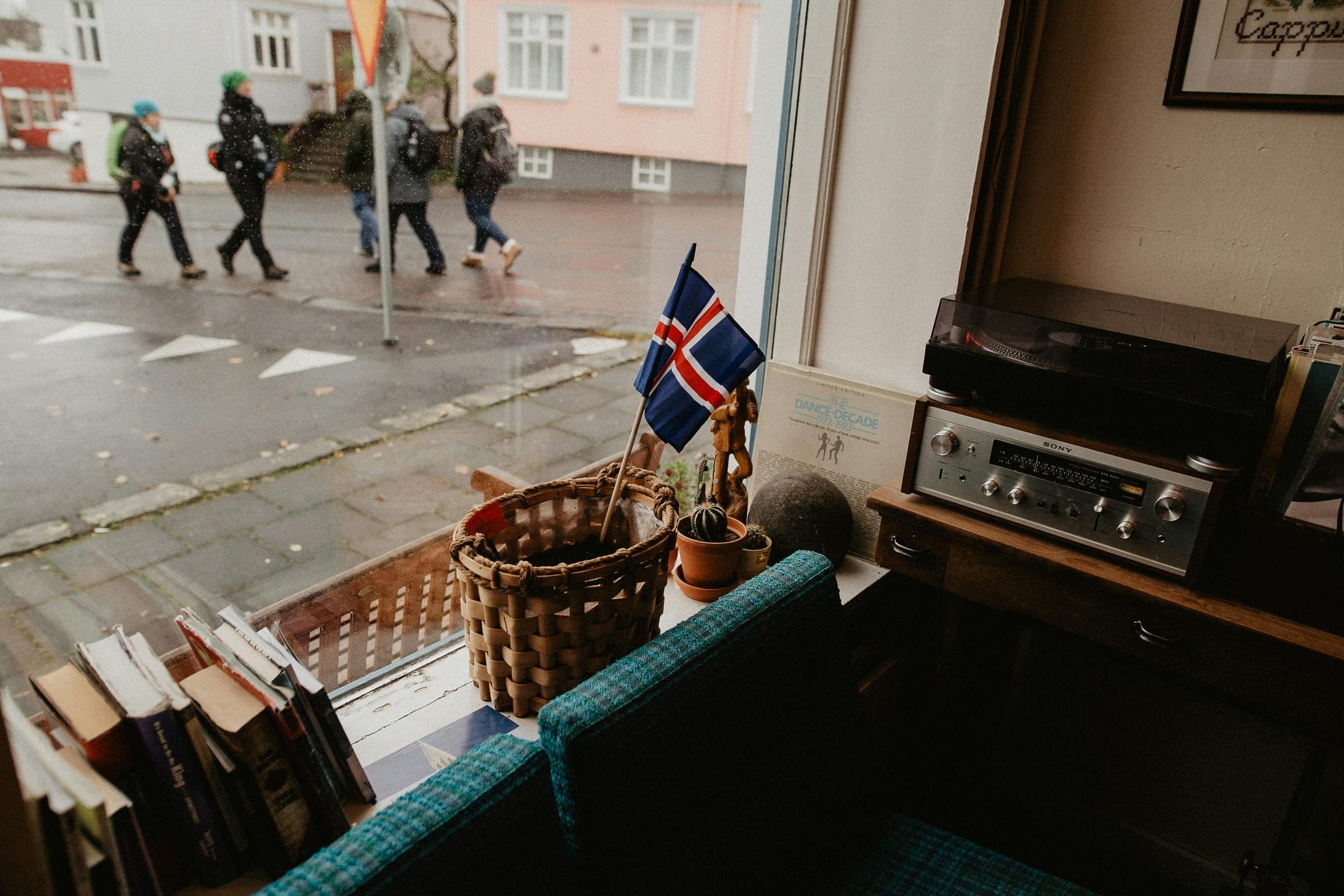
The room itself is small and plainly furnished. The walls have some visual material relating to Icelandic culture and history, which you can read while you wait or while you eat. The pace is unhurried. This is not a café built around fast turnover.
How to get there
The café is on Lokastigur, directly opposite the main facade of Hallgrimskirkja in central Reykjavik. If you are already planning to visit the church or the Leif Eriksson statue in front of it, the café is visible from that location. Walking from central Laugavegur takes roughly ten to fifteen minutes depending on your starting point. The uphill approach along Skólavörðustígur, the long straight street leading directly to Hallgrimskirkja, passes several small shops and galleries and is a reasonable walk in itself.
Public bus routes serve the broader Hallgrimskirkja area. If you are arriving by car, parking in this part of the city is subject to the standard Reykjavik zone regulations and can be limited during peak hours. The café does not have dedicated parking. Given the central location, walking or using public transport is generally easier.
What to expect on arrival
The café is small. On busy days, particularly in summer when Hallgrimskirkja draws large numbers of visitors, you may need to wait for a table. The queue tends to move at a reasonable pace, but arriving slightly before or after peak meal hours gives you a better chance of sitting down immediately.
Ordering is straightforward. The menu is available in English, and the staff are accustomed to explaining dishes to visitors who are unfamiliar with the ingredients. If you are uncertain about something, asking is fine.
A practical approach for a first visit is to order one of the combination plates or a selection of open-faced rye bread pieces alongside a skyr dish. This gives you a reasonable spread of flavours without ordering more than you can eat. The portions are not large by international fast-food standards, which is appropriate given that some of the flavours are quite concentrated.
Budget roughly an hour for the experience if you want to eat without rushing and spend a few minutes looking at the surrounding area afterward. You do not need more time than that unless you plan to return for a second course or linger over coffee.
The café serves coffee and tea alongside the food. It is a calm space for a mid-morning or midday stop, and the location makes it a sensible point to anchor a walk around the Hallgrimskirkja neighbourhood.
When to go
Café Loki operates year-round, which makes it useful across all seasons. In summer, Reykjavik sees a significant increase in visitors, and the area around Hallgrimskirkja is particularly busy. The café fills up during this period, and lines are common at peak lunch hours.
In autumn and winter, the foot traffic decreases and the atmosphere inside the café becomes quieter. A bowl of skyr or a plate of rye bread with smoked lamb has a different feel when it is cold and grey outside, and the food makes slightly more intuitive sense eaten in that context. Winter light in Reykjavik is low and short, and the café is a good place to sit for a while if the weather has turned and you need to regroup.
Spring is a reasonable middle ground. The days are lengthening, visitor numbers are climbing but have not yet peaked, and the city has a particular kind of energy that rewards taking things slowly.
Tips and responsible-visitor notes
A few practical points worth keeping in mind:
- Check current opening hours before visiting. Cafés in Reykjavik sometimes adjust hours seasonally, and independent establishments occasionally close for holidays or private events.
- If you have dietary restrictions, review the menu in advance. Many of the traditional dishes are built around animal products, and options for strict vegetarian or vegan diets are limited by the nature of the cuisine.
- The café is small enough that occupying a table for an extended period during a busy service affects other visitors. Eating and then moving on is the considerate approach.
- Hallgrimskirkja itself charges a fee to access the tower viewing platform. If you plan to combine a visit to the church with a stop at the café, factor in time for both.
The location is inherently convenient if you are already in this part of the city. If you are not, it is worth knowing that the walk up to Hallgrimskirkja from the lower town is short and flat enough that most visitors manage it without difficulty.