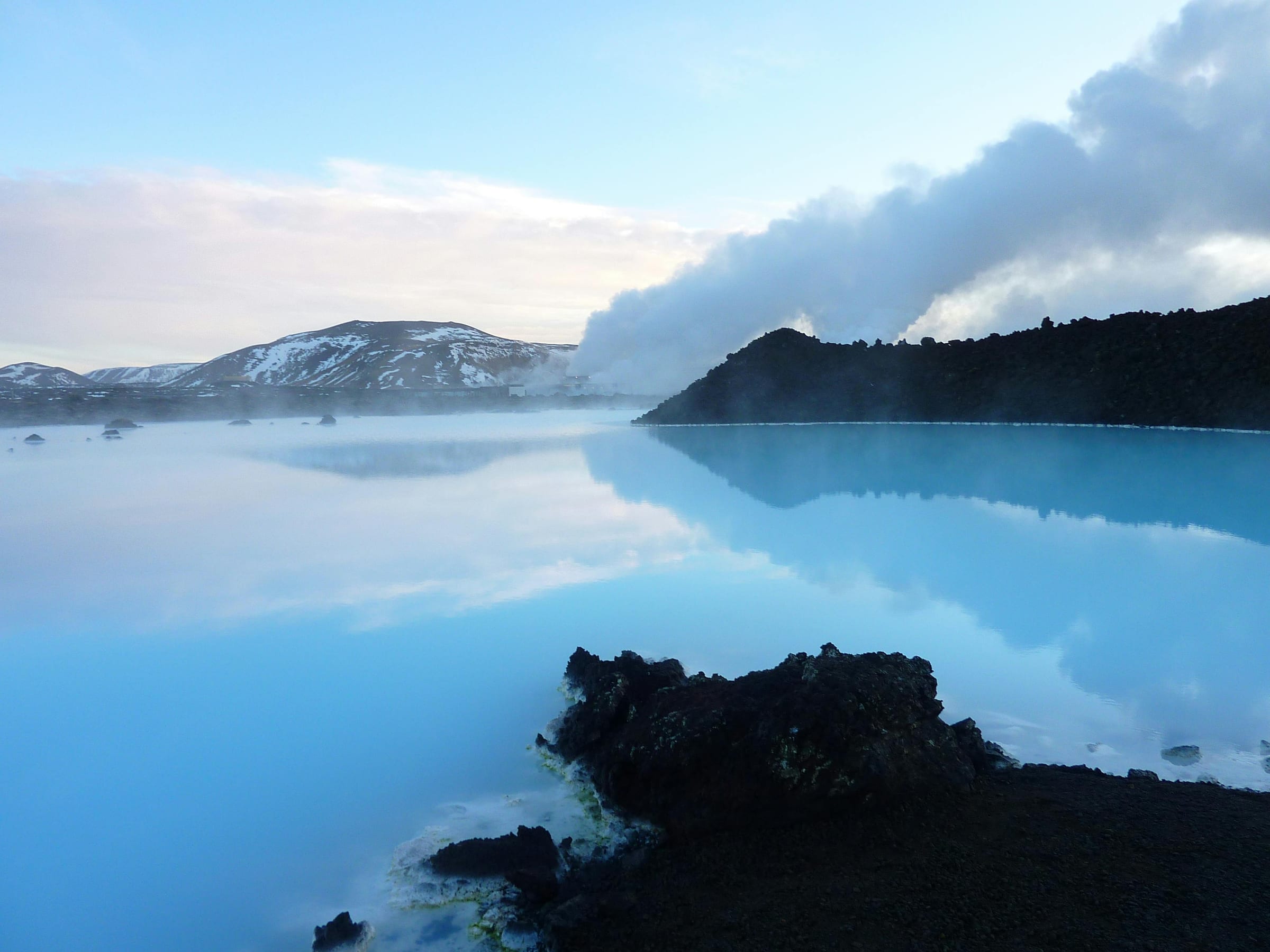
The water at Blue Lagoon is not naturally occurring in the way most visitors assume. It is a byproduct. The milky, mineral-laden liquid that fills the outdoor pools originates from the Svartsengi geothermal power plant nearby, which draws superheated seawater from deep below the Reykjanes lava fields. That water, after passing through the plant’s heat exchange system, flows into a shallow lava hollow and over decades has developed its own chemistry: silica, algae, and minerals that give the pool its characteristic blue-white color and leave skin feeling unusually smooth. Knowing this does not diminish the experience. It reframes it.
Why it’s worth the trip
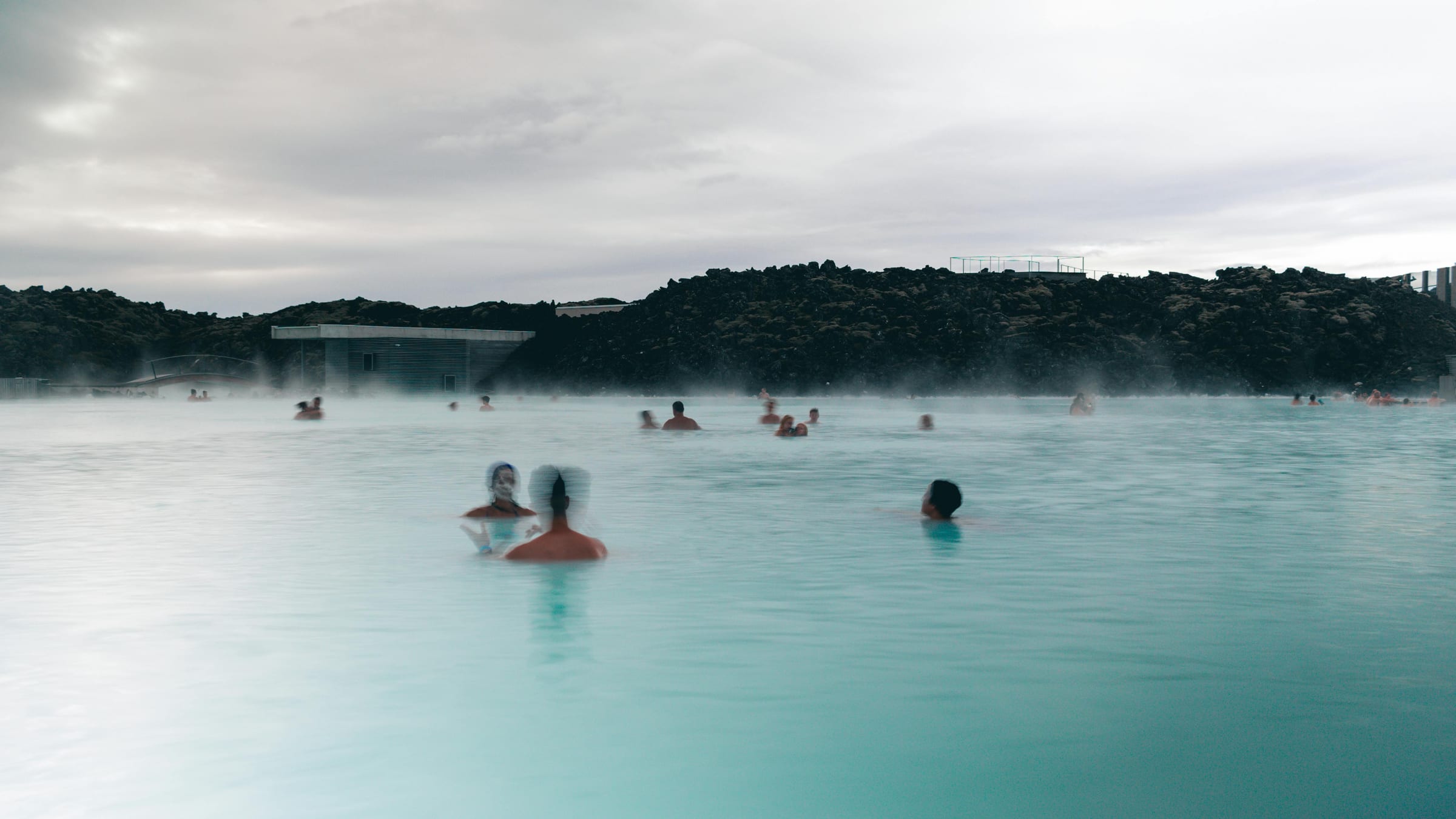
The appeal is straightforward. You are outdoors, in warm water, surrounded by dark lava rock, with steam rising around you regardless of whether the sky is clear or overcast. The temperature holds at roughly 37 to 39 degrees Celsius year-round, which means the experience does not change dramatically with the season. What changes is the light, the air temperature, and the crowd density.
The silica mud available in the pool is one of the genuinely distinctive elements. Visitors scoop it from dispensers along the edges, apply it to their faces, and let it dry before rinsing. It sounds gimmicky but the silica is part of what makes the water itself effective at softening skin, so using it in concentrated form is not entirely theatrical. The steam caves built into the lagoon’s interior are small enclosed areas where the heat intensifies. They are useful for warming up thoroughly before moving back into the open pool, and they reduce in appeal somewhat when crowded.
The in-water bar allows guests to order drinks without leaving the pool. The menu includes non-alcoholic options alongside alcoholic ones. The logistics of carrying a drink while floating in chest-deep water are straightforward once you accept that everything will eventually smell faintly of minerals.
The facilities are well maintained and the changing rooms are modern. Locker systems are electronic. Towels and robes are available depending on the package booked at entry. The spa side of the complex, which offers full treatments, requires separate booking well in advance and is a distinct experience from the general pool access.
How to get there
Blue Lagoon sits on the Reykjanes Peninsula, roughly 50 kilometres southwest of Reykjavik and about 20 kilometres from Keflavik International Airport. This proximity to the airport is one of its most practical features. Many visitors stop here on arrival before driving to Reykjavik, or on departure before a flight. The road from the airport, Route 43 connecting to Route 41, runs through flat lava fields and is straightforward to drive. There is a car park at the site.
Public transport from Reykjavik is available via scheduled bus services run by operators connecting the capital to the lagoon. Journey times are reasonable. If you are flying in or out of Keflavik, the airport-to-lagoon transfer is also an option through various transport companies. A car is not strictly necessary, though it gives more flexibility with timing.
The surrounding lava field, part of the Reykjanes UNESCO Global Geopark, is worth a few minutes of attention on arrival or departure. The moss-covered lava formations directly around the car park and entrance path show how slowly life colonizes this kind of terrain.
What to expect on arrival
Pre-booking is essential. Blue Lagoon does not accept walk-ins during peak periods, and capacity is managed carefully through timed entry slots. Turning up without a reservation is likely to result in being turned away, particularly during summer and around major holidays. Book through the official website, select a time slot, and arrive within the window specified.
At check-in, wristbands function as your locker key and payment method inside the facility. You are directed through the changing rooms before entering the water. Showers before entry are mandatory, as they are at most Icelandic pools.
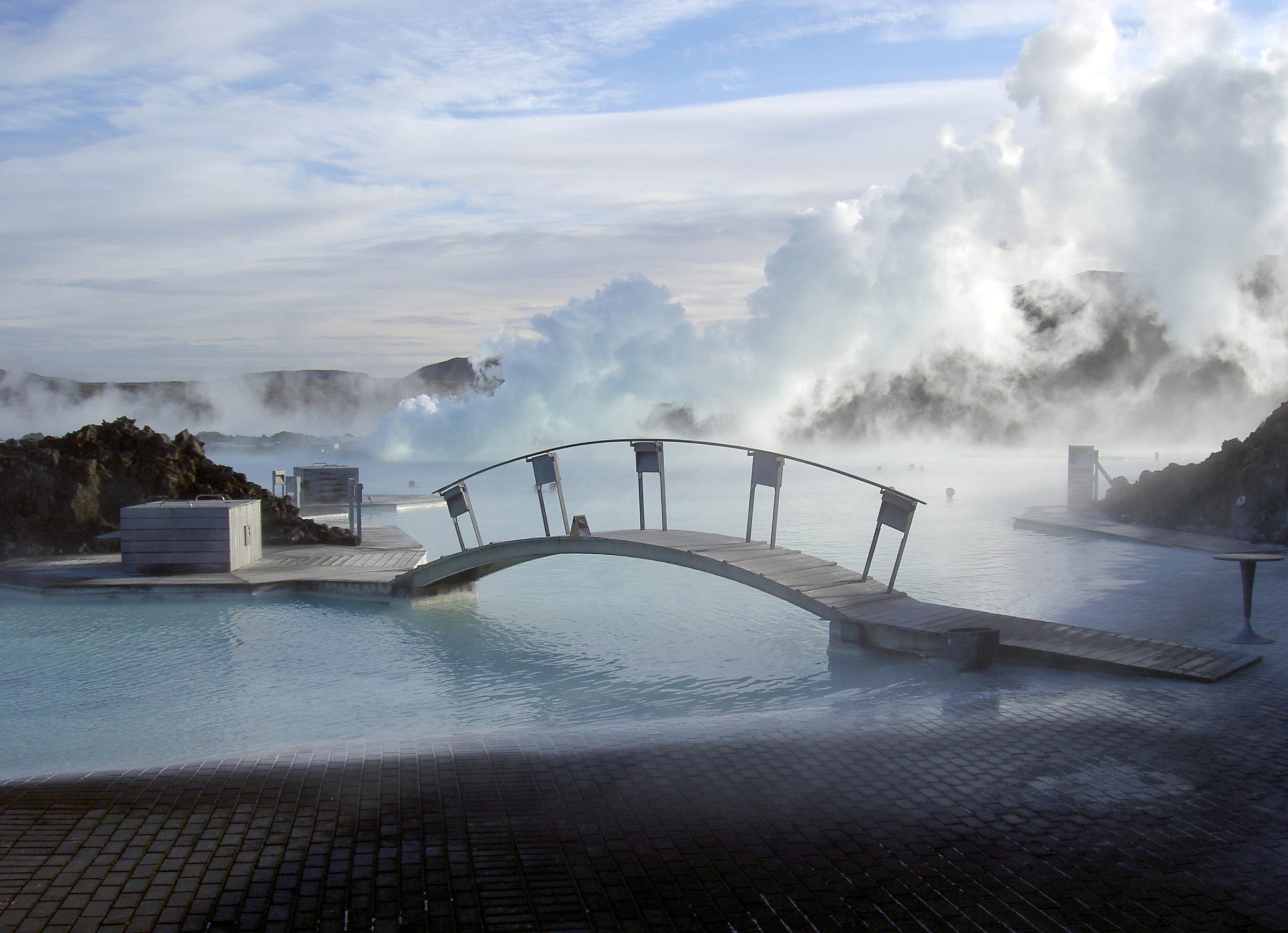
The pool complex itself is larger than photographs suggest. There are areas of different depth, sheltered sections, and more exposed open water. On a cold or windy day, the steam becomes thicker and visibility across the pool drops. On a calm, clear day the whole structure is visible and the contrast between the pale water and the dark lava is sharp and photogenic. Neither is better than the other; they are different experiences.
Crowds concentrate near the bar and the entry points. Moving away from those areas, particularly into the sections farther from the main pavilion, reduces the sense of density. The pools are busy by Icelandic standards. This is not a quiet mountain spring. It is a large, well-run commercial facility that happens to sit in a remarkable geological setting.
When to go
Because the water temperature is consistent year-round, the season matters mostly for conditions outside the water. In winter, the air is cold, the steam is dramatic, and if you are lucky with timing, the northern lights are visible overhead. In summer, the midnight sun means you can visit late in the evening with full daylight, which is genuinely unusual and calm. Spring and autumn offer a middle ground: fewer visitors than peak summer, variable weather, and reasonable daylight.
The busiest periods track with international flight schedules and Icelandic school holidays. Early morning slots and later evening slots tend to be quieter than midday. This is worth factoring into your booking if you prefer more room in the pool.
Tips and responsible-visitor notes
A few practical points worth knowing before you go:
- Hair care matters. The silica-rich water tangles and can damage hair with prolonged exposure. The facility provides conditioner and recommends applying it before entering the water. Take this seriously if you have long or treated hair.
- Jewellery, particularly silver, should be removed before entering. The water discolors and can damage metal quickly.
- Sunscreen applied inside the pool washes off and enters the water. The facility has specific guidelines on this and offers alternatives.
- Photography is common and generally accepted in the public pool areas. Exercise normal judgment near other guests.
- Budget the full 2.5 hours at minimum to use the space without rushing, including time for the changing rooms, mud mask, steam cave, and at least one visit to the bar area.
The Blue Lagoon is genuinely easy to access and requires minimal physical effort. It is appropriate for most fitness levels. The floor of the pool is uneven in places and can be slippery, so movement should be deliberate rather than hurried.