Við Pollinn sits at the edge of Ísafjörður’s working harbour, inside a restored timber warehouse that smells faintly of salt and old wood. It is not a destination that requires much persuasion. You come to the Westfjords, you find yourself in the town, and at some point you sit down here and eat fish that was almost certainly in the water very recently.
Why it’s worth the trip
The Westfjords are not a region you pass through by accident. Getting there takes real commitment, whether by road or by air, and Ísafjörður is the region’s main hub rather than a stop along a ring-road route. That geography shapes how the town’s food culture works. There is no supply chain trucking in product from Reykjavik to meet tourist demand. The fishing boats docked outside the restaurant are not decorative.
Við Pollinn has been running long enough that it functions as part of the local fabric rather than a recent attempt to monetise the scenery. The menu reflects what the surrounding waters actually produce: Arctic char, cod, and langoustine feature heavily. Arctic char in particular is a fish that rewards attention. It is leaner and more delicate than salmon, with a cleaner finish, and in the Westfjords it tends to arrive at the table with very little done to obscure what it is. Langoustine from these waters is sweet and firm without the mushiness that can come from poor handling or long transport.
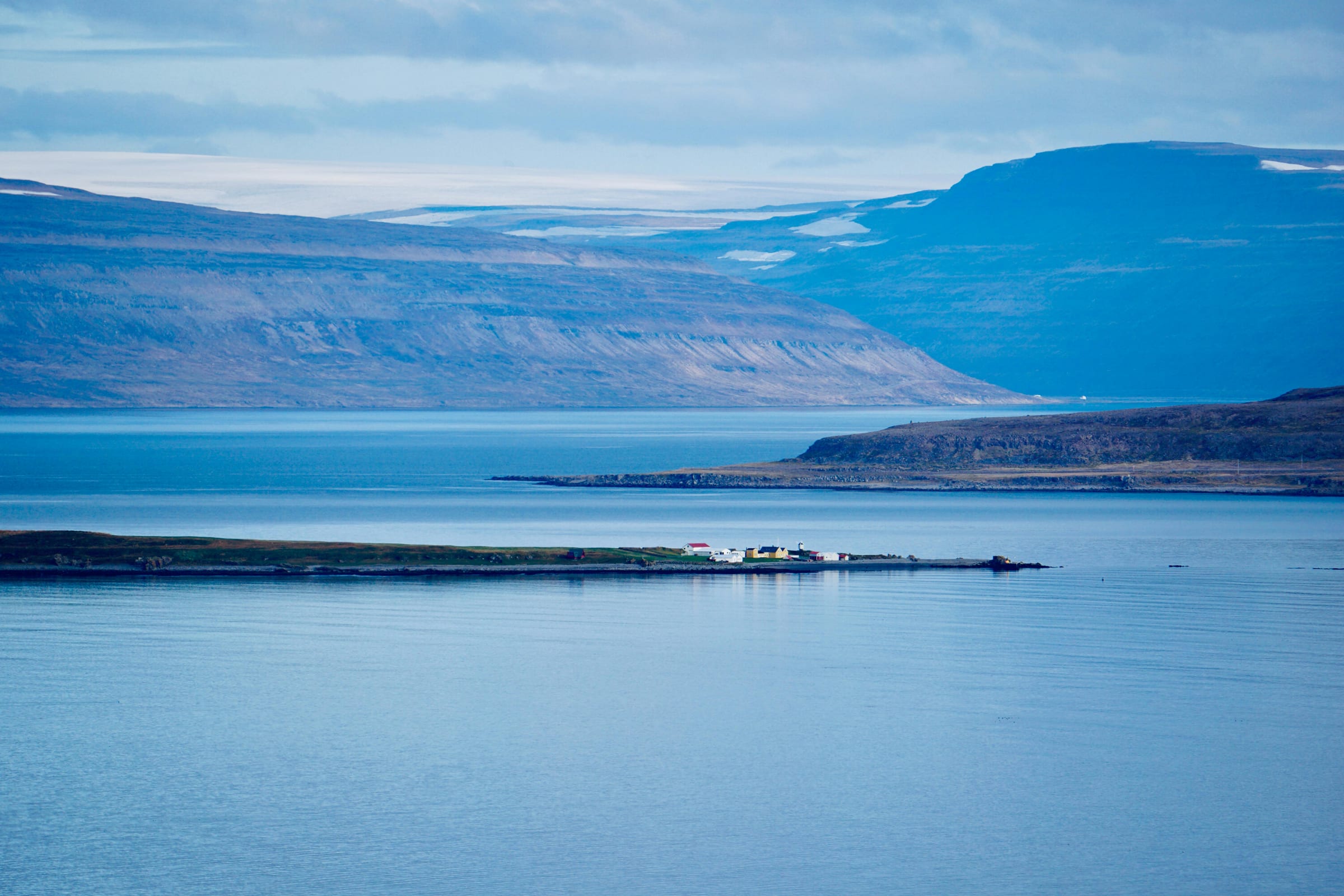
The building itself contributes to the experience in a practical way. Sitting inside a timber warehouse that looks directly onto the fjord and the working harbour means you can watch boats while you eat, which sounds like a small thing but is genuinely grounding. You are not looking at a photograph of where your food comes from. The view is plainly functional, not framed for effect.
This is not a formal restaurant in the white-tablecloth sense, nor is it a casual quick-service counter. It occupies a middle register that suits the town. Portions tend to be substantial. Prices reflect the remoteness of the region and the quality of the sourcing, so it is worth going in without assumptions based on what similar fish would cost in a city.
How to get there
Ísafjörður is reachable by road via the long westward drive through the Westfjords, which involves several fjord-hugging mountain roads that can be slow and demanding depending on conditions. The town is also served by domestic flights from Reykjavik, which take under an hour and make day trips possible, though a day trip to the Westfjords undersells what the region has to offer.
Once in Ísafjörður, the harbour area is compact and walkable from most of the town’s accommodation. The restaurant is on the harbourside, close to where fishing vessels moor. You will find it without difficulty if you follow the waterfront.
If you are driving into town, the harbour area has parking nearby, though the town is small enough that walking a short distance is rarely a hardship.
What to expect on arrival
The building’s exterior is straightforward, wooden, and weathered in the way that harbour structures in the North Atlantic tend to be. Inside, the space is warm, the ceiling is high, and the structural bones of the warehouse are still visible. There is nothing fussy about the interior design. Timber, light, and the fjord outside the windows are the main features.
The menu changes with availability and season. Asking staff what came in recently is a reasonable approach rather than arriving with a fixed idea of what you want. The fish on the menu on one visit may not be identical to what appears on another. This is a function of the sourcing rather than inconsistency, and it is generally a good sign.
Service in Westfjords restaurants tends to be unhurried. A meal here fits naturally into a longer afternoon rather than a tight schedule. The suggested duration of around ninety minutes reflects how the pacing tends to work rather than a slow kitchen. Plan accordingly, especially if you have a flight or a long drive afterward.
The restaurant serves both lunch and dinner, though confirming current opening patterns before you visit is sensible, particularly outside the main summer season when hours across the region can shift.
When to go
The restaurant operates across all four seasons, which is itself worth noting. Many tourism-facing businesses in the Westfjords operate on reduced schedules outside of June-September, so a place that remains open through winter is genuinely useful if you are visiting during the darker months.
Summer is when Ísafjörður sees its highest footfall, and the harbour is at its most active. Daylight lasts through the night in June and July, which means you can arrive at nine in the evening and still eat with the sun above the mountains and light on the water outside.
Autumn brings fewer visitors and, depending on timing, the beginning of winter fishing activity. Winter itself is worth considering. The town is quiet, the fjord occasionally freezes at its edges, and the mountains surrounding Ísafjörður carry significant snow. Eating fresh local fish during a winter visit to the Westfjords feels less like a tourist activity and more like something the town actually does.
Spring is a practical time to visit if you want reasonable road conditions and the start of the lighter season without the peak summer crowds.
Tips and responsible-visitor notes
A few practical notes that may save small frustrations:
- Card payment is standard in Iceland, but carrying some cash is never a bad idea in remote regions where connectivity occasionally lags.
- Reservations are worth making during summer, particularly for dinner. The space is not enormous, and the town sees concentrated visitor traffic in July and August.
- The waterfront area around the harbour is easy walking territory. Combining lunch here with time spent looking at the town’s older timber architecture makes for a sensible afternoon without much planning.
- If you have dietary restrictions, the menu is fish-forward by nature. Confirming what is available for non-fish eaters before you visit is a reasonable step.
- Weather in the Westfjords can close roads and delay or cancel flights at short notice. If your visit depends on a connection out of Ísafjörður, build in buffer time rather than booking a departure the same afternoon as a long lunch.
The restaurant is not difficult to reach, does not require physical effort, and fits into a visit to Ísafjörður without any particular planning beyond making a reservation. It is a place that does what it does with consistency, and the fish is worth sitting down for.