Eight thousand years ago, a lava flow moving across the Snæfellsnes Peninsula left behind something that most visitors to the region never think to look for: a hollow tube running beneath the surface, formed when the outer skin of the flow cooled and solidified while molten rock continued moving through the interior. When that interior drained, it left a cavity. Vatnshellir is one of the better-preserved examples of this process in Iceland, and it sits close enough to the Ring Road around Snæfellsnes that visiting it requires almost no detour at all.
Why it’s worth the trip
Iceland has dozens of lava tubes, but relatively few are accessible to the general public in a structured, safe way. Vatnshellir stands out because it goes deep. The descent takes you roughly 35 metres below the surface through two spiral staircases, which is enough to leave the daylight and the wind fully behind. Down there, the temperature holds steady regardless of what is happening above ground, and the geological detail is visible in ways that surface landscapes do not allow.
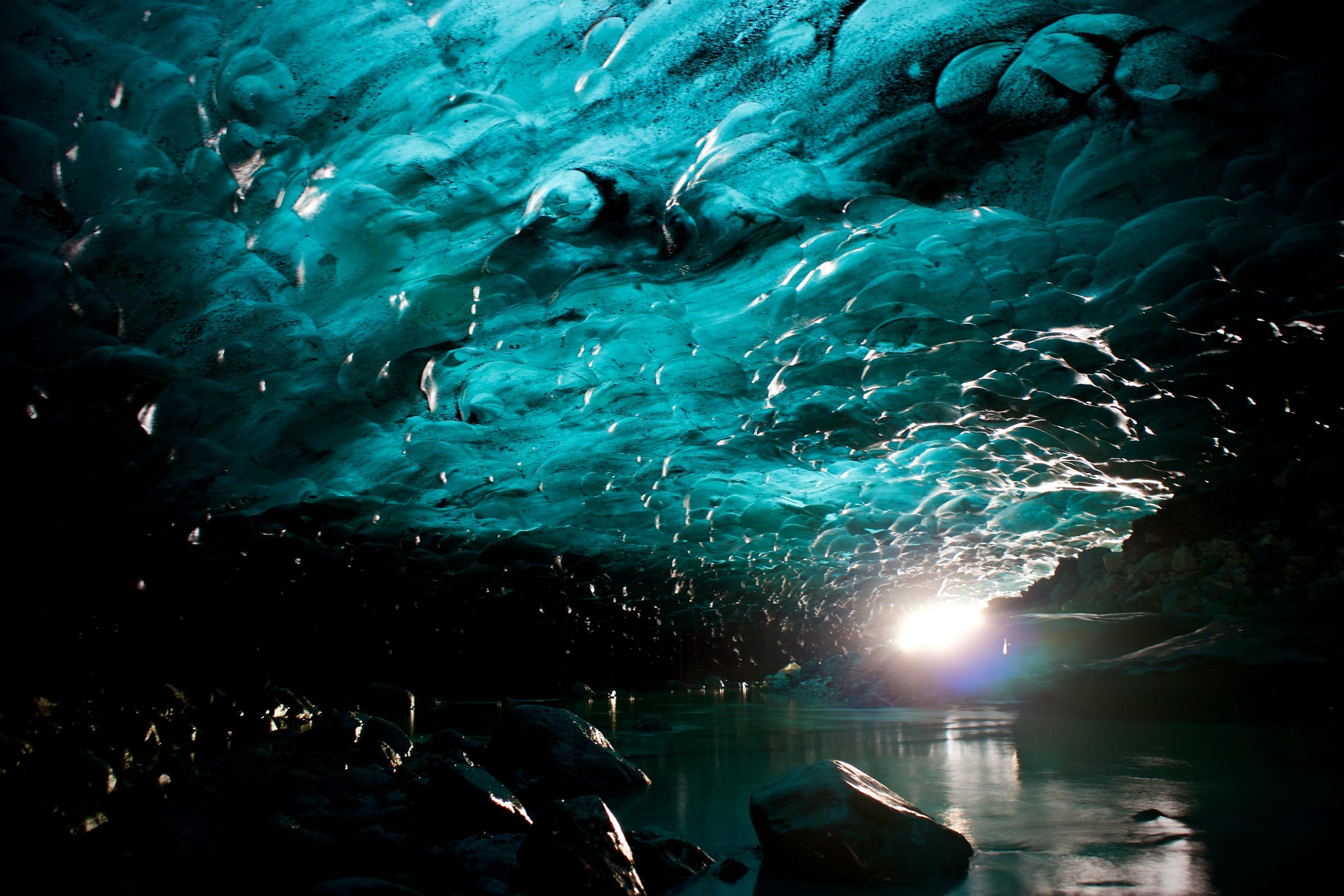
The walls show layered basalt with distinct flow lines, the texture of cooled lava that moved, paused, and moved again. There are formations where lava dripped and hardened mid-motion. The floor in places is uneven from where secondary flows pooled inside the tube before draining further. None of this requires specialist knowledge to appreciate; a good guide will read the rock for you and explain what each feature records about the original eruption.
The cave is part of the Snæfellsjökull National Park, which means it exists within a broader protected landscape and the management reflects that. The guided format is not an obstacle to enjoyment; it is what makes the experience coherent. You are not simply walking through a dark tunnel. You are moving through a specific geological event with someone explaining the sequence.
How to get there
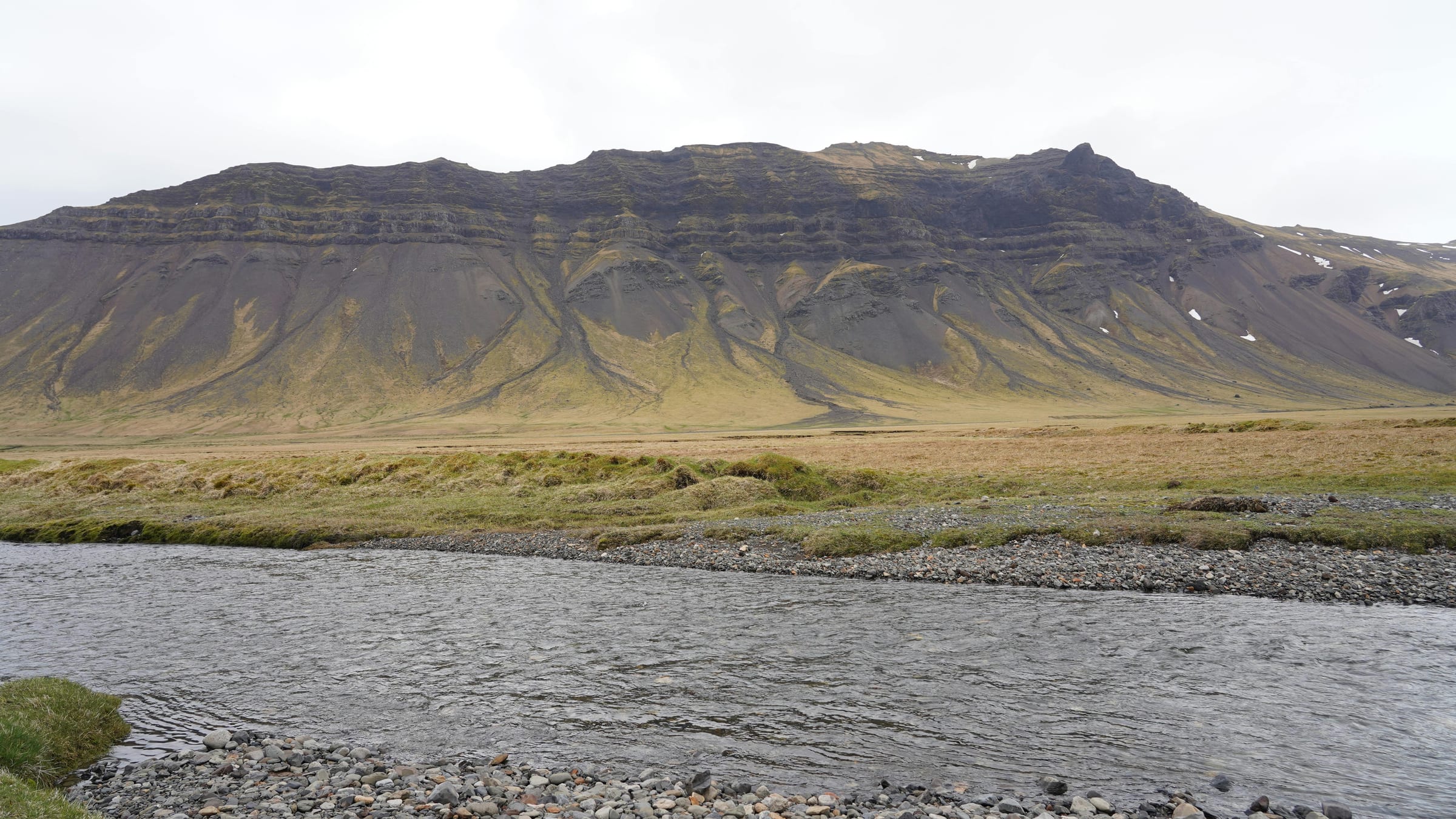
Vatnshellir sits on the south side of the Snæfellsnes Peninsula, along Road 574 which loops around the base of Snæfellsjökull. The site is signed from the road, and the parking area is accessible by ordinary passenger vehicle. You do not need a four-wheel-drive to reach it, which distinguishes it from several other stops in this part of the national park that sit on rougher F-roads or tracks.
The nearest town with services is Arnarstapi to the east or Hellnar slightly closer to the west, both small coastal settlements. If you are driving the full loop of Snæfellsnes, Vatnshellir fits naturally into the southern stretch, roughly halfway between Grundarfjörður in the north and Stykkishólmur. Most people approach it as part of a longer day on the peninsula rather than as a standalone destination, and that is the sensible way to treat it.
What to expect on arrival
Tours depart from a small surface structure at the cave entrance. Your group will be given helmets and each person carries a torch for the underground sections. The descent begins with the first spiral staircase, which is metal and feels industrial rather than rustic; this is intentional, since the installation was designed to allow broad access without damaging the cave walls.
Once underground, the tour moves through a series of chambers. The guide will stop at specific points to illuminate formations and explain their origin. Lava stalactites, basalt columns, and the ribbed ceiling of the tube itself are among the features typically highlighted. The ceiling height varies, and there are sections where taller visitors will want to watch their heads, though nothing requires crawling or squeezing.
The total underground time is roughly 45 minutes, which is enough to absorb the main chambers without fatigue. The return is via the second staircase, ascending back to surface level from a different point in the tube. The pace is calm and the physical demand is low; the main challenge for some visitors is simply the darkness between torchlight cones and the cool, damp air, neither of which is extreme but both of which are real.
Children generally manage the tour without difficulty, though the staircases have a noticeable pitch and younger children should be comfortable on metal stairs in low light. The cave floor requires attention in places due to uneven surfaces, but the guides are straightforward about where to place your feet.
When to go
Tours operate year-round, which is one of Vatnshellir’s genuine practical advantages. The underground temperature does not change with the seasons, so summer and winter visits are equally comfortable from a thermal standpoint. What changes is surface conditions and the experience of arriving.
In summer, the approach across the lava field reads differently than in winter, when snow may cover the surrounding landscape and the entrance structure sits in a stark white context. Autumn brings low-angle light across the lava field that shows its surface texture clearly. Spring can be muddy around the parking area after snowmelt.
Peak visitor numbers coincide with the main summer travel season, roughly June-August, when tour frequency tends to be higher and the peninsula generally carries more traffic. Shoulder seasons in May and September are quieter without losing the reasonable road conditions that make the area accessible.
Tips and responsible-visitor notes
A few practical points worth keeping in mind:
- Tours are guided only; you cannot enter the cave independently, and attempting to do so outside of organised visits is not permitted under national park rules.
- Booking ahead is advisable in summer, particularly for groups and during July when the Snæfellsnes road can be busy.
- Wear layers. The surface temperature on a bright summer day can make the underground temperature feel sharper than expected. A light jacket or fleece in your bag is sensible regardless of the forecast above ground.
- The helmets provided are functional rather than fashionable. Long hair is easier to manage if it is tied back before you put one on.
- Photography inside the cave is possible with a torch or phone flash, but managing both light source and camera while following the group takes some coordination. A headlamp of your own, if you carry one, is more practical than a handheld torch for keeping both hands free.
- The lava field surrounding the entrance is fragile at surface level; stay on marked paths and do not walk across the moss or vegetation between the parking area and the cave.
Vatnshellir rewards the visit precisely because it is concrete and specific. You descend into a documented geological event, walk through it, and come back up. That is a clear, uncomplicated thing to do on the Snæfellsnes Peninsula, and it takes less than an hour.