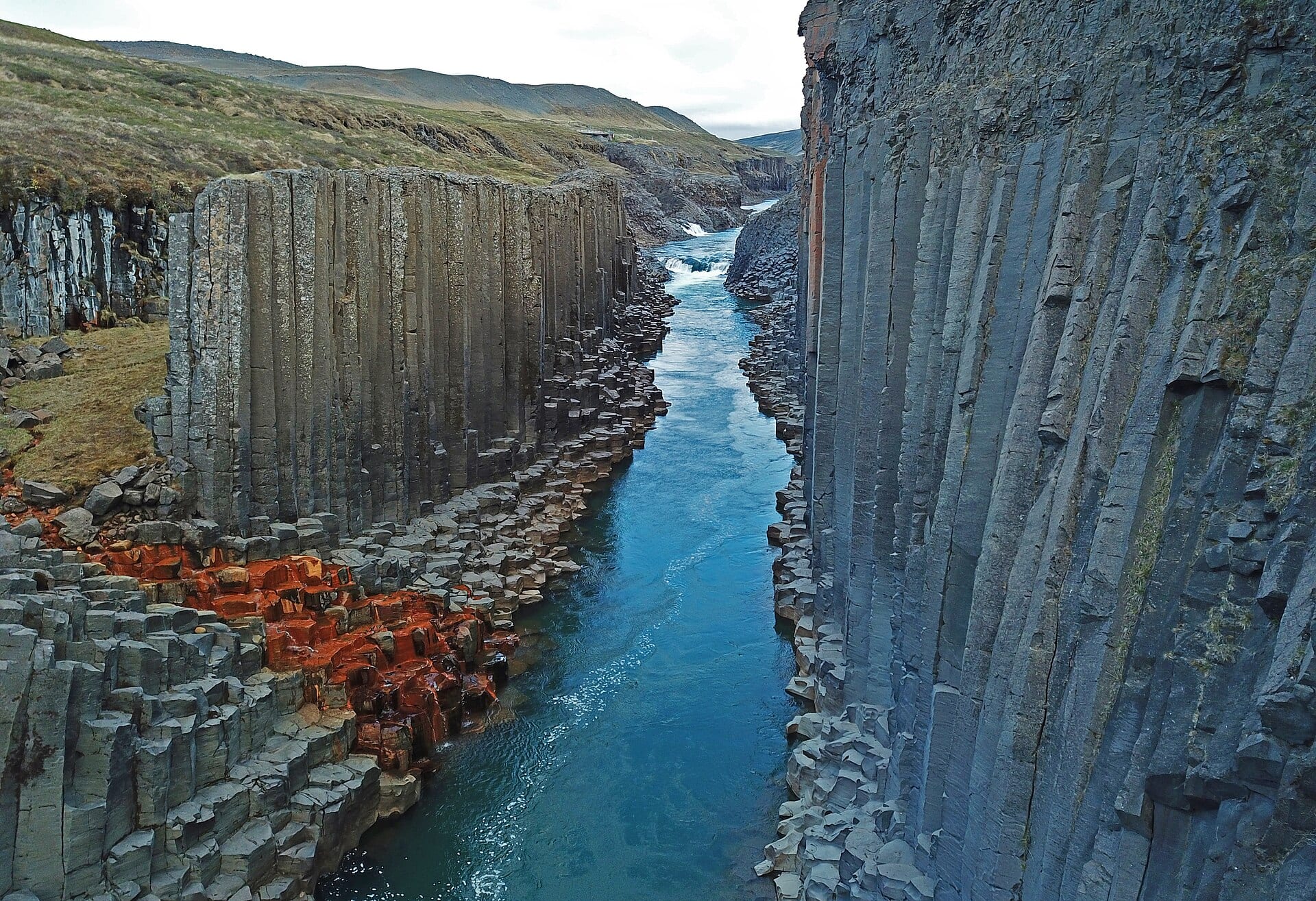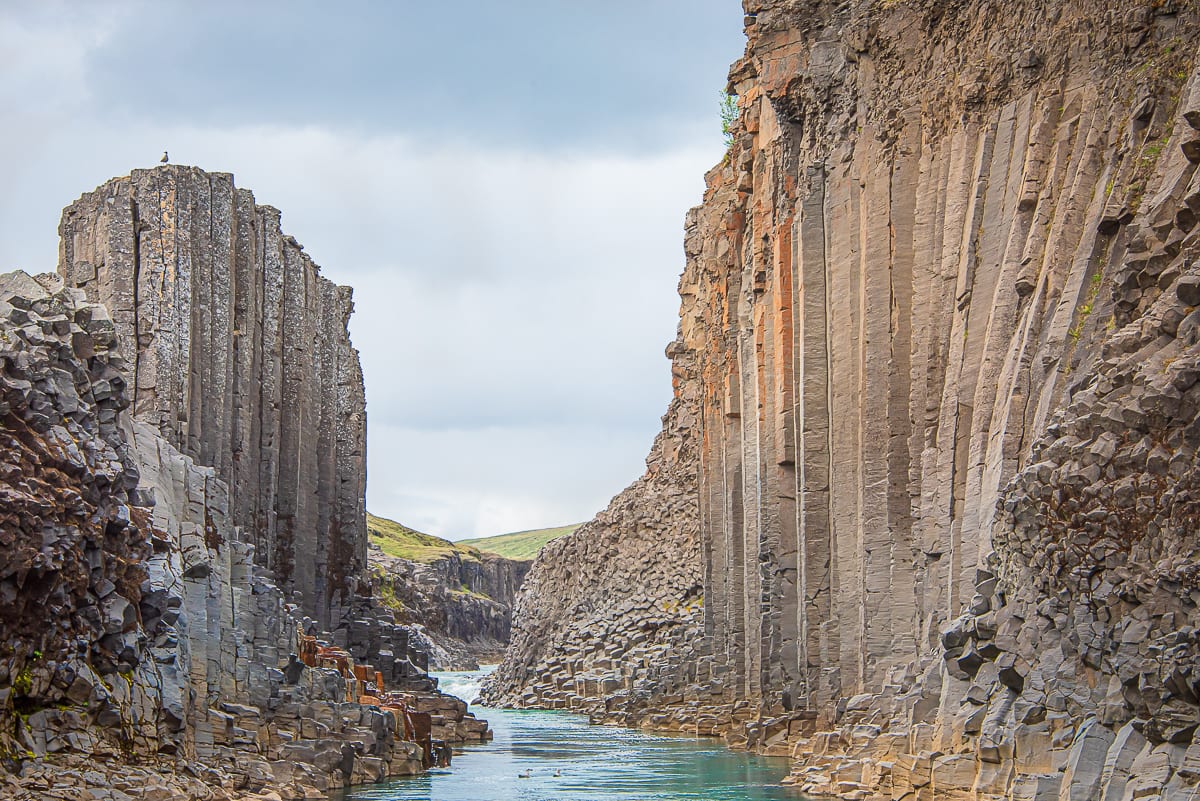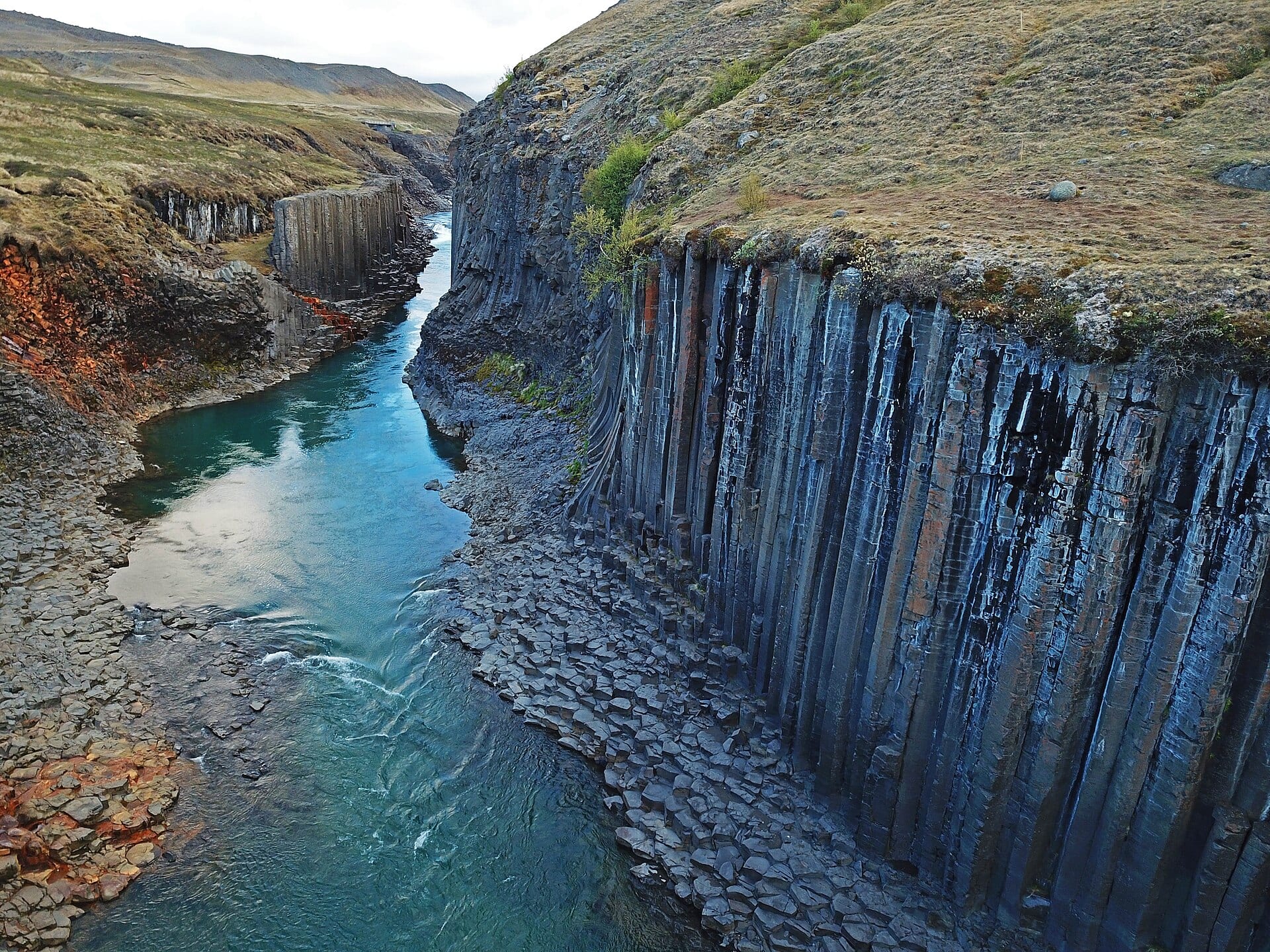
Stuðlagil is one of those places where the geology does something so precise and repeated that it starts to feel deliberate. The canyon walls are packed with hexagonal basalt columns standing shoulder to shoulder, vertical and uniform, stacked from the river to the rim in dense arrangements that geologists call columnar jointing. The Jökla glacial river cuts through the floor below. When the light is right and the water is low, the effect is genuinely unusual, and the journey out there is long enough to feel earned.
Why it’s worth the trip
Most basalt column formations in Iceland are scattered or partially eroded. At Stuðlagil, they are intact and concentrated along a substantial stretch of gorge wall, which makes the visual density unlike anything at, say, Svartifoss or the Gerðuberg cliffs. The columns here are also largely submerged in character, framed below by glacial blue-green water rather than open ground, which changes how they read visually and how the whole canyon feels.
There are two ways to experience the canyon. The first is the rim overlook, a short walk from a parking area on the south side, which gives you a view down into the gorge. This is accessible for most visitors and involves relatively little elevation change. You see the columns from above and across. It is a worthwhile stop, particularly if river conditions or group fitness rule out the alternative.
The second approach is the riverbed walk on the north side, which brings you down to canyon level and lets you walk among the columns rather than above them. This is the route most photographers target. The access track on the north side is rougher, and the walk itself is longer and more demanding underfoot. Once you reach the canyon floor, the columns rise on both sides and the scale becomes apparent in a way the rim view cannot replicate.
The riverbed walk is only viable when water levels are low enough to allow safe passage along the narrow canyon floor. The Jökla is glacial, which means it is cold, often murky, and subject to rapid changes depending on weather and glacial melt higher up. If the river is running high, the floor access is not simply difficult; it is impossible without wading into fast, cold water, which is not advisable. This is not a technicality, it is a real constraint that determines whether the north-side route is available to you on any given day.
How to get there
Stuðlagil lies in the Jökuldalur valley in East Iceland, inland from the Ring Road. The nearest town is Egilsstaðir, the regional hub in the east, which is where most visitors base themselves when exploring this part of the country.
From Egilsstaðir, you drive north on the Ring Road briefly before turning into the valley along Road 923. The drive into Jökuldalur is a reasonable distance, and a portion of the road toward the canyon is unpaved. Road surface quality changes with weather and season, and while an ordinary car can manage much of it, you should check current conditions before assuming the road is in good shape. The two access points, south rim and north riverbed, are at different locations and require some navigational attention if you plan to use both.
This is not a roadside stop. The canyon itself is a drive plus a walk, and the north-side approach in particular is a half-day commitment if you include the drive from Egilsstaðir. Allow time accordingly.
What to expect on arrival
The south rim viewpoint is the quicker option. The walk from the parking area is short, the path is reasonably clear, and the canyon opens below you with enough drama to make the stop worthwhile. From here you can see the column arrangement clearly, the river below, and the general shape of the gorge. It is a good orientation point.
The north side is a different proposition. The track is rougher and the walk to the canyon floor is longer. Footing along the canyon base is uneven: rocks, shallow water in places, and the kind of surface that rewards solid footwear. You are walking in a confined gorge with a cold river at your feet and columns rising steeply on both sides. The gorge walls are close enough in places that the sky narrows to a strip above you. It is not claustrophobic exactly, but it is enclosed, and the acoustics of the river amplify that quality.
Neither route requires technical equipment or specialist experience, but the north-side walk is genuinely moderate terrain and should not be treated as a casual stroll. If you are visiting with children or anyone with limited mobility, the rim view is the sensible choice and still gives a clear sense of the canyon.
When to go
Summer is the most accessible season, with long daylight hours and reasonable road conditions through June-August. September brings lower visitor numbers and can offer cleaner light, though glacial river levels in late summer can be variable, and autumn conditions in East Iceland can shift quickly.
Avoid the canyon after heavy rain or during significant warm spells when glacial melt is elevated. Both conditions raise river levels and close off the riverbed approach. Checking weather forecasts for the preceding days, not just the day of your visit, will give you a better sense of whether the floor walk is realistic.
Winter access is complicated by road conditions and limited daylight, and this is not a winter destination for most visitors.
Tips and responsible-visitor notes
- Check road conditions before you leave Egilsstaðir. Road 923 and the tracks beyond it are not always maintained to the same standard.
- Wear waterproof boots, particularly if you plan the north-side walk. Even in dry conditions, the canyon floor involves wet rock.
- The columns are part of an irreplaceable geological formation. Do not climb on them or remove rock samples, which degrades the site.
- River conditions change throughout the day as well as across seasons. A canyon floor that is passable in the morning may not be by early afternoon if temperatures rise.
- Bring food and water. There are no facilities at the canyon itself.
- The remote valley setting means mobile signal is unreliable.
The canyon rewards patience and a degree of planning. On a clear day in late summer with the river running low, the north-side walk is among the more visually distinctive things you can do in East Iceland.