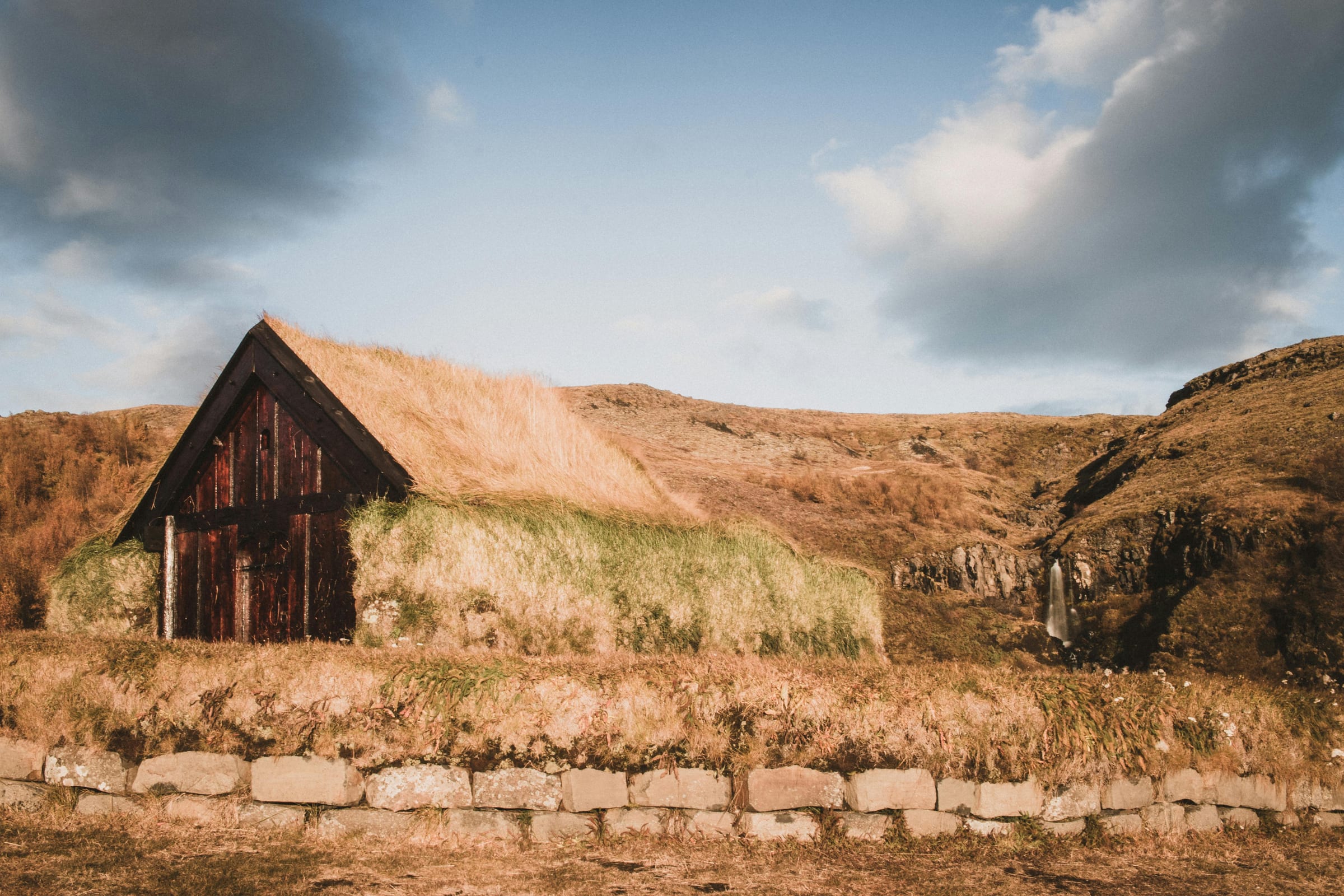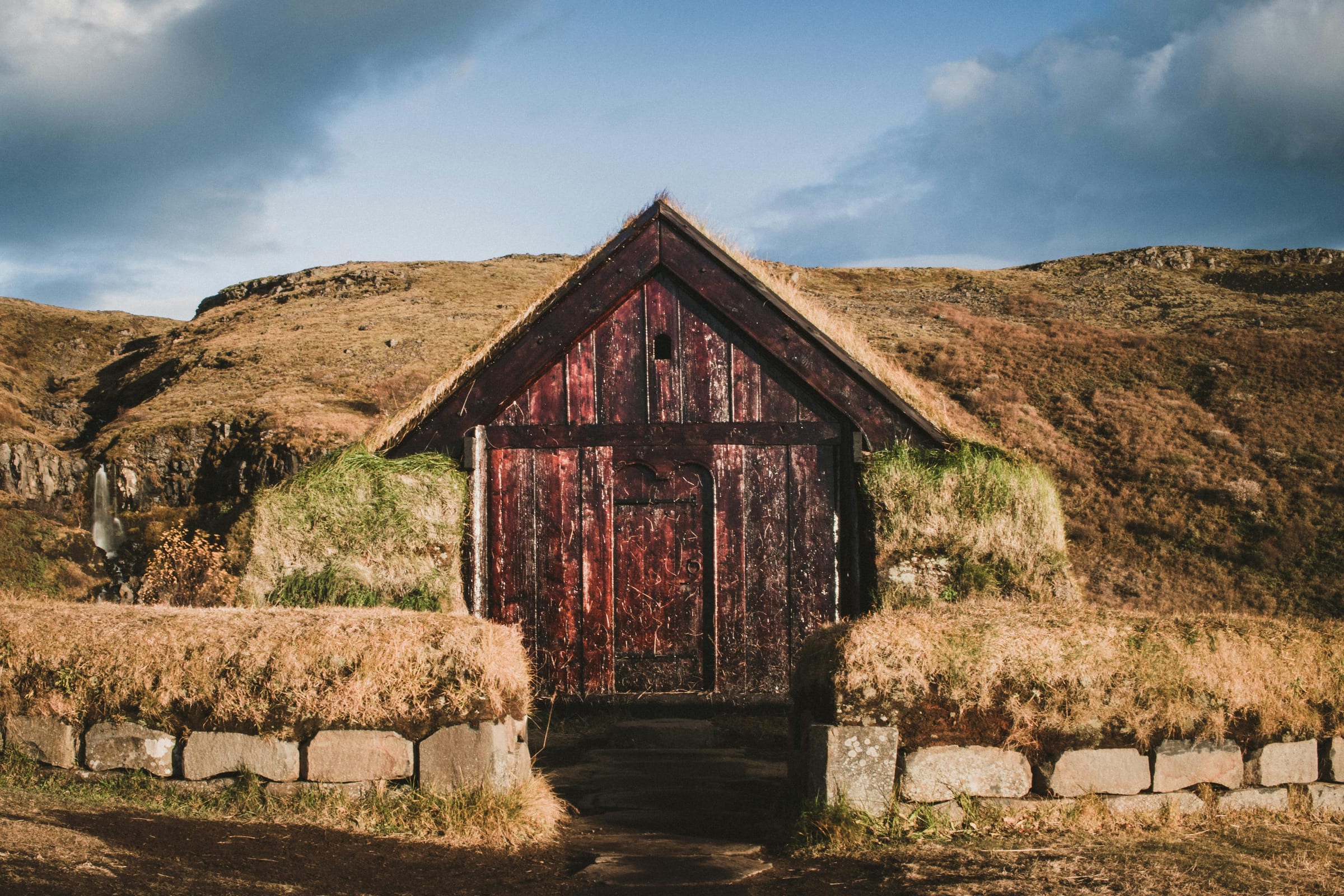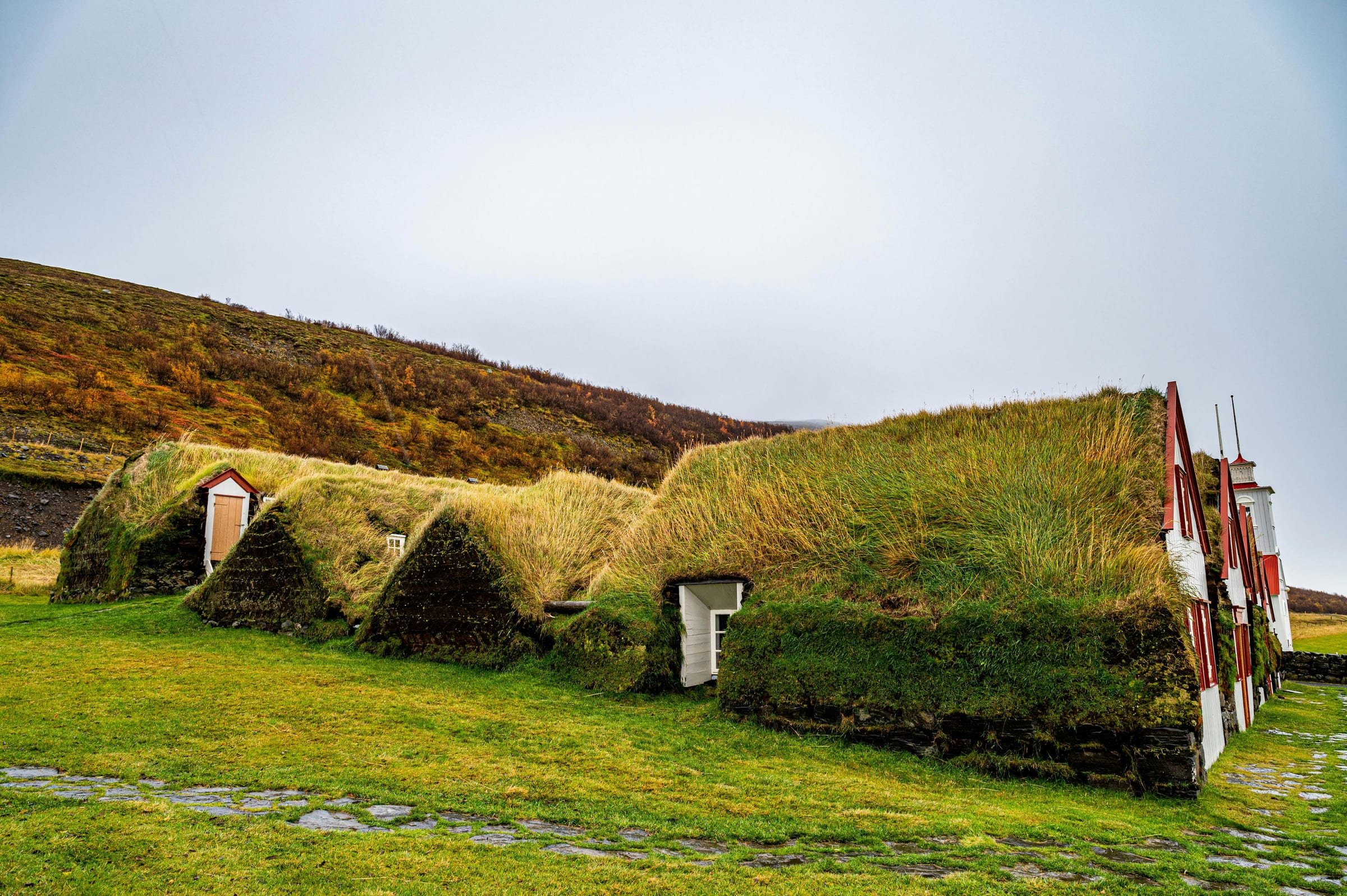
Turf houses sit at the center of Icelandic architectural identity in a way that few other structures do. For roughly a thousand years, from the time of settlement through the early twentieth century, the majority of Icelanders lived in buildings constructed from stacked sod, local stone, and driftwood timber. The land itself became the building material, not out of aesthetic preference but because timber was scarce and the ground could insulate against wind and cold far better than any imported material available at the time. What survives today is a small but well-preserved collection of sites, scattered across the country, where visitors can move through these buildings and understand something concrete about how Icelandic domestic life actually worked before the twentieth century reshaped everything.
This guide is for visitors who want to build turf house visits into a broader Iceland itinerary, rather than treating them as an afterthought.
Who This Trip Suits
You do not need to be a dedicated heritage traveler to get real value from turf house sites. Most of the major preserved farms are located close to roads that general visitors already travel, which means the detour cost is low. That said, the experience rewards people who slow down and look carefully. These are not dramatic landscape destinations. They are quiet, often small, and they work best when you take time to move through the interior spaces and read what is displayed about how the rooms functioned.
First-time visitors who are spending seven to ten days doing a Ring Road circuit will find that several key sites fall naturally into that route. Visitors on a short three or four day trip based in Reykjavik can reach the most significant single site in the country without difficulty. History-focused travelers could reasonably build a multi-day itinerary around the combination of turf farm sites, folk museums, and settlement-era exhibits, though this works best as part of a longer stay.
The Most Significant Sites
Glaumbaer in North Iceland
Glaumbaer, in the Skagafjordur region of the north, is the most complete and well-maintained turf farm complex in Iceland. The farm operated as a working homestead into the twentieth century, which means its buildings reflect centuries of gradual construction and modification rather than a single historical moment. The main structure consists of a series of interconnected rooms, each with a specific domestic function, arranged along a central corridor. The layout demonstrates clearly how Icelandic farmsteads were organized around communal living, with sleeping, cooking, storage, and work rooms packed tightly together under shared turf roofs.
Glaumbaer also has a folk museum component with later nineteenth and early twentieth century exhibits, which gives it more depth than a site that only presents the medieval period. The village of Saudarkrokur is nearby and offers accommodation and services.
From Reykjavik, Glaumbaer is a full day of driving even if you go direct, which makes it realistically a stop within a Ring Road circuit rather than a standalone day trip from the capital. Travelers driving the north via Route 1 or the western fjord approach should plan to build in at least two to three hours at the site itself.
Keldur in South Iceland
Keldur, near Hella in the south, holds a different kind of significance. Parts of the turf farmstead at Keldur are considered among the oldest surviving domestic structures in Iceland, with some elements potentially dating back to the medieval period, though the site has seen continuous modification. It is managed by the National Museum of Iceland and is typically accessible during the summer season, though visitors should confirm current access arrangements before making it a fixed plan.
Keldur is considerably smaller than Glaumbaer and receives fewer visitors, which can actually work in its favor. The setting in the flat agricultural land south of the highlands is quieter, and the farm retains a sense of place that is harder to find at sites that have been more thoroughly developed for tourism. It sits close to the main road corridor between Reykjavik and the south coast, so it can be combined logically with visits to Hekla, the Rangarvellir area, or continuing east toward Vik and Skaftafell.
Arbaer Open Air Museum in Reykjavik
For travelers who do not have time to reach Glaumbaer or Keldur, Arbaer Open Air Museum on the eastern edge of Reykjavik offers an accessible alternative. The museum has reassembled a collection of historic buildings on one site, including turf structures alongside later wooden buildings that trace Icelandic domestic architecture across several periods. It is not a single preserved farm in its original location, which is an important distinction, but for visitors who want to understand the scale and interior feel of turf construction without a long drive, it serves that purpose reasonably well.
Arbaer is reachable by city bus from central Reykjavik, which makes it genuinely useful for visitors who are not driving or who are spending only a couple of days in the capital.
Other Smaller Sites
Several other turf structures survive across the country in varying states of preservation and with varying levels of visitor access. Some are on private land, some are only viewable from the exterior, and others have limited or seasonal opening arrangements. The Westfjords region has a handful of preserved or partially preserved turf buildings that reward travelers already making that journey, though they should be treated as contextual stops rather than primary destinations. The National Museum in Reykjavik also holds architectural salvage and exhibits related to turf construction that fill in historical gaps for visitors who want more background before or after seeing the actual sites.
What to Prioritize When Time Is Tight
If you have limited time and can only visit one turf house site in depth, Glaumbaer is the right choice for most visitors. The scale and completeness of the complex, the quality of interpretation, and the surrounding region all make it the site where the investment of travel time is most clearly returned.
If you are based in Reykjavik with two to three days and no car journey north planned, Arbaer followed by a visit to the National Museum gives you a reasonable introduction, even if it lacks the impact of a preserved farm in its original landscape.
Keldur is worth including when you are already traveling through the south and have an extra hour or two available. It should not anchor an itinerary on its own unless you are specifically focused on the medieval period and have done enough background research to get the most from a quieter site.
Seasonal and Driving Tradeoffs
Most turf house sites have seasonal visiting windows. Summer, broadly defined as late May through September, is when the majority of heritage sites operate reliable opening hours and have staff present for guided context or basic interpretation. Outside of this window, some sites may be inaccessible or only viewable from the exterior, and opening arrangements become less predictable.
The road to Glaumbaer from Reykjavik runs through the north, which means either a route over Holtavorduheioi or the longer coastal route. Both are manageable in summer. Winter driving in the north requires more caution and trip time assumptions should be revised significantly upward. Keldur in the south is more accessible year-round given the milder road conditions along the southern corridor, but checking access before visiting in winter is still sensible.
Daylight is generous in summer and limited in winter. Most visitors doing turf house visits in combination with other sightseeing should plan their heritage stops for mid-morning to early afternoon when light is consistent and sites are staffed.
Practical Planning Before You Go
A few things worth sorting before building these sites into a firm itinerary. Confirm current opening periods and whether guided tours are offered or required, as this varies by site and year. Budget meaningful time at each site rather than treating them as brief stops. An hour at Glaumbaer will leave you with surface impressions; two to three hours allows you to move through the buildings carefully and understand how the spaces relate to each other.
If Icelandic history and architecture genuinely interest you, visiting the National Museum in Reykjavik early in your trip creates useful context that makes the physical sites more legible when you reach them. The museum covers the settlement period and everyday material culture in ways that frame what you see at the farms.
Travel in a group or alone, by rental car or campervan, the turf house sites reward a mindset of looking closely at small details rather than moving quickly. These are buildings where the meaning is in the accumulation of specific choices: the thickness of a wall, the arrangement of a sleeping bay, the way a corridor connects rooms that each had their own function in a household that could not afford to waste a single square meter of insulated space.