Driving in Iceland is genuinely one of the more manageable self-drive destinations in northern Europe, but it carries a specific set of challenges that catch first-timers off guard. The roads look simple on a map. The distances look short. The rental car looks adequate. Then a wind gust hits your door on a coastal highway, or you find your GPS routing you onto an unmarked gravel track, and the trip starts to feel different. This guide covers the core decisions you will face: which roads are safe for standard vehicles, when F-roads open, how to read weather hazards realistically, and how to structure a route that matches your actual experience level.
Understanding Iceland’s Road Categories
Iceland’s road network has a clear hierarchy, and that hierarchy matters more here than in most countries.
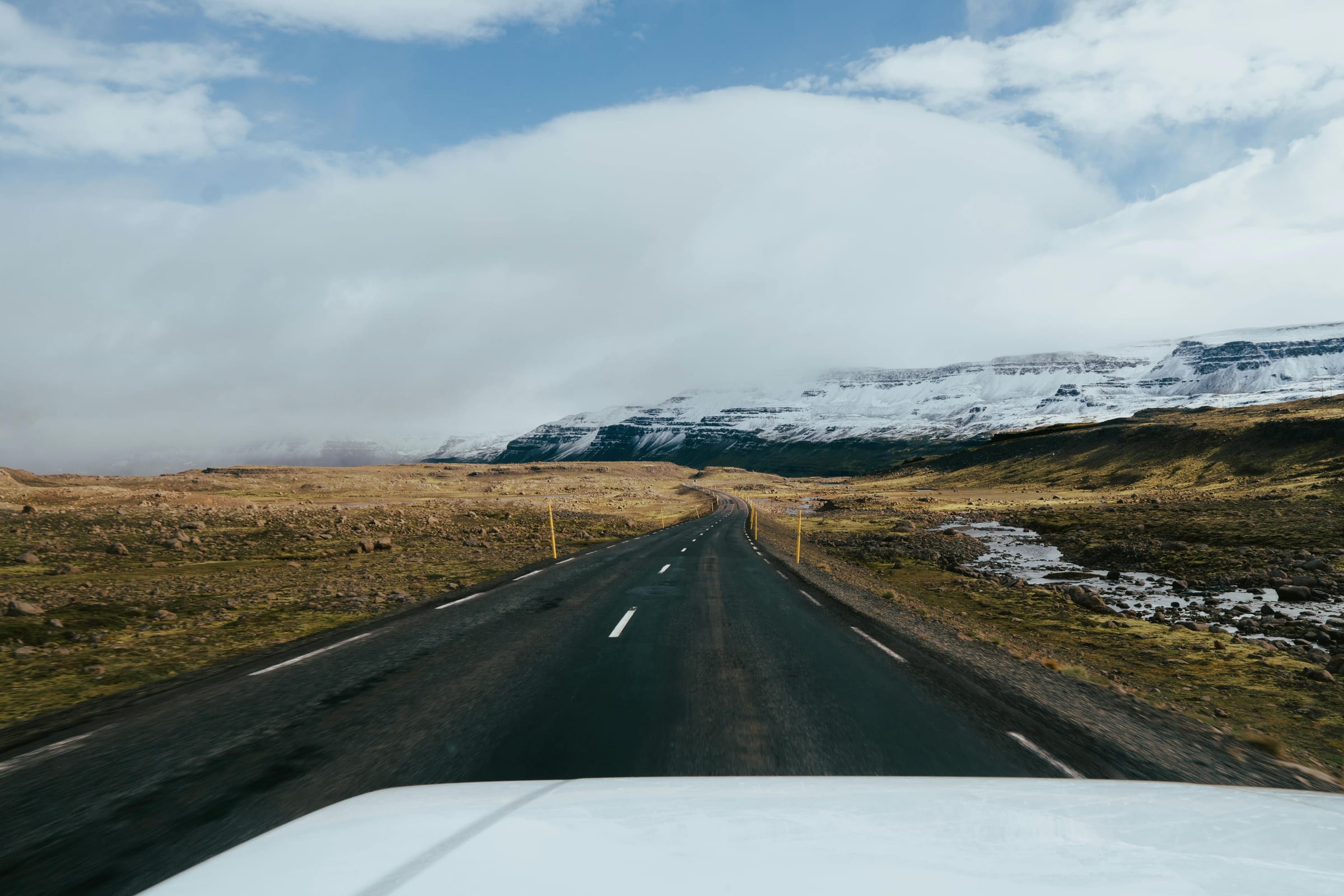
The Ring Road, officially Route 1, circles the entire island and is paved throughout. It connects most major towns, passes near the majority of popular natural sites, and can be driven in a standard 2WD rental car in dry conditions. It is the logical spine of any first-timer’s itinerary.
Secondary paved roads branch off the Ring Road to reach coastal villages, peninsulas like the Snæfellsnes or Reykjanes, and areas like the Westfjords. These are also generally accessible to standard vehicles, though some are narrow and winding.
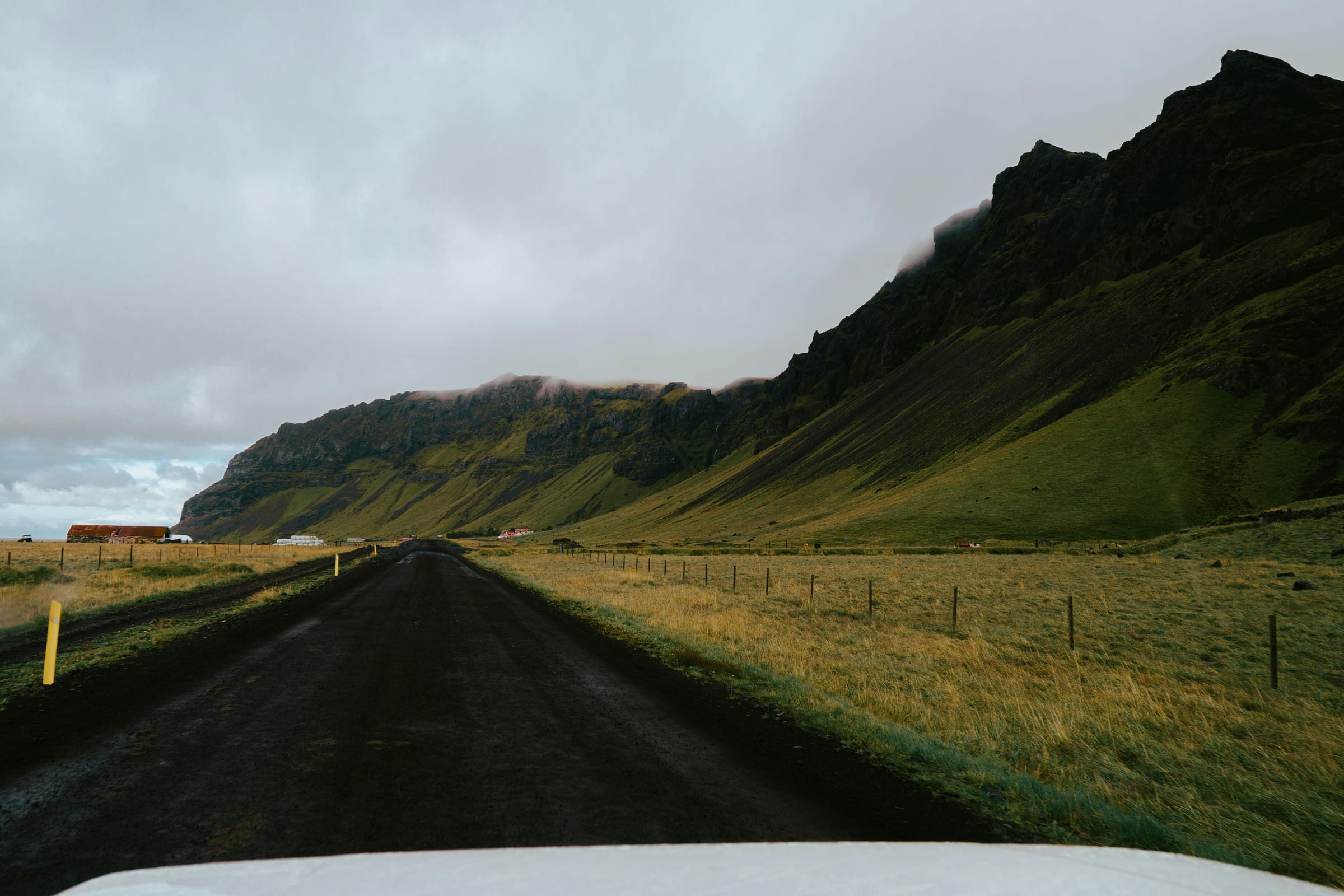
Gravel roads, marked as F-roads (highland roads) or simply unpaved secondary roads, are a different matter. Regular gravel roads that are not classified as F-roads can often be navigated in a standard rental car, but they reduce speed considerably and can damage tyres. Read your rental agreement carefully, because many policies exclude gravel road damage even on non-F classified tracks.
F-roads are highland interior routes. They require a four-wheel-drive vehicle without exception. They frequently include river crossings with no bridge, loose volcanic gravel, steep inclines, and rapidly changing weather. They are also closed for most of the year, typically only open from late June through early September, though the exact dates shift year to year depending on snowmelt. The Icelandic Road and Coastal Administration website publishes current road status, and checking it the morning you plan to drive is a practical habit worth building.
Who Should Plan Around the Ring Road
If this is your first time in Iceland, or your first time driving in subarctic conditions, the Ring Road is the right frame for your trip. It is not a compromise. The road passes volcanic landscapes, glacier tongues, waterfalls, fishing towns, and coastal cliffs. Driving the full circuit covers roughly 1,332 kilometres, and most people allow seven to ten days for a complete loop at a pace that allows for stops.
A common first-timer mistake is treating the Ring Road like a motorway. Speeds are lower than in most European countries, weather can cut visibility quickly, and the stops you actually want to make are usually down short access roads that add time. Factor in at least an hour of buffer per day beyond what maps suggest.
The south coast between Reykjavik and Höfn is the most visited stretch, and for logical reasons. It concentrates a large number of glaciers, black sand beaches, waterfalls, and accessible hikes within a relatively compact corridor. If your trip is under five days, concentrating here and skipping the full loop is a more sensible approach than racing the whole Ring Road and seeing nothing closely.
Gravel Roads: The Middle Ground
Between the paved Ring Road and the restricted F-roads lies a large category of gravel roads that do not appear threatening on maps but deserve real consideration. Roads serving the Westfjords, for example, are largely unpaved, and driving there adds both time and physical fatigue that visitors underestimate. The Westfjords are genuinely worth including in a longer itinerary, but they are not ideal for someone who has never driven on loose gravel surfaces, and the combination of cliff-edge roads and poor weather is not a gentle introduction to Icelandic driving.
On gravel roads in general:
- Reduce speed significantly. Loose gravel reduces traction and dramatically increases stopping distances.
- Stay well behind any vehicle in front of you. Gravel thrown at windshields is one of the most common causes of damage claims on Icelandic rental cars.
- Confirm rental coverage explicitly. The standard collision damage waiver typically does not cover gravel chip damage to windshields or undercarriage.
- Avoid accelerating out of soft verges. Pulling back onto a gravel road from soft ground can drag the underside of a low-clearance vehicle.
F-Roads: What They Require and When to Go
The interior highlands are accessed through routes like the Kjölur, Sprengisandur, and Landmannalaugar roads, among others. These routes pass through terrain that looks unlike anything accessible from the coast, including rhyolite mountains, active geothermal areas, and vast lava fields. But the access requirements are strict.
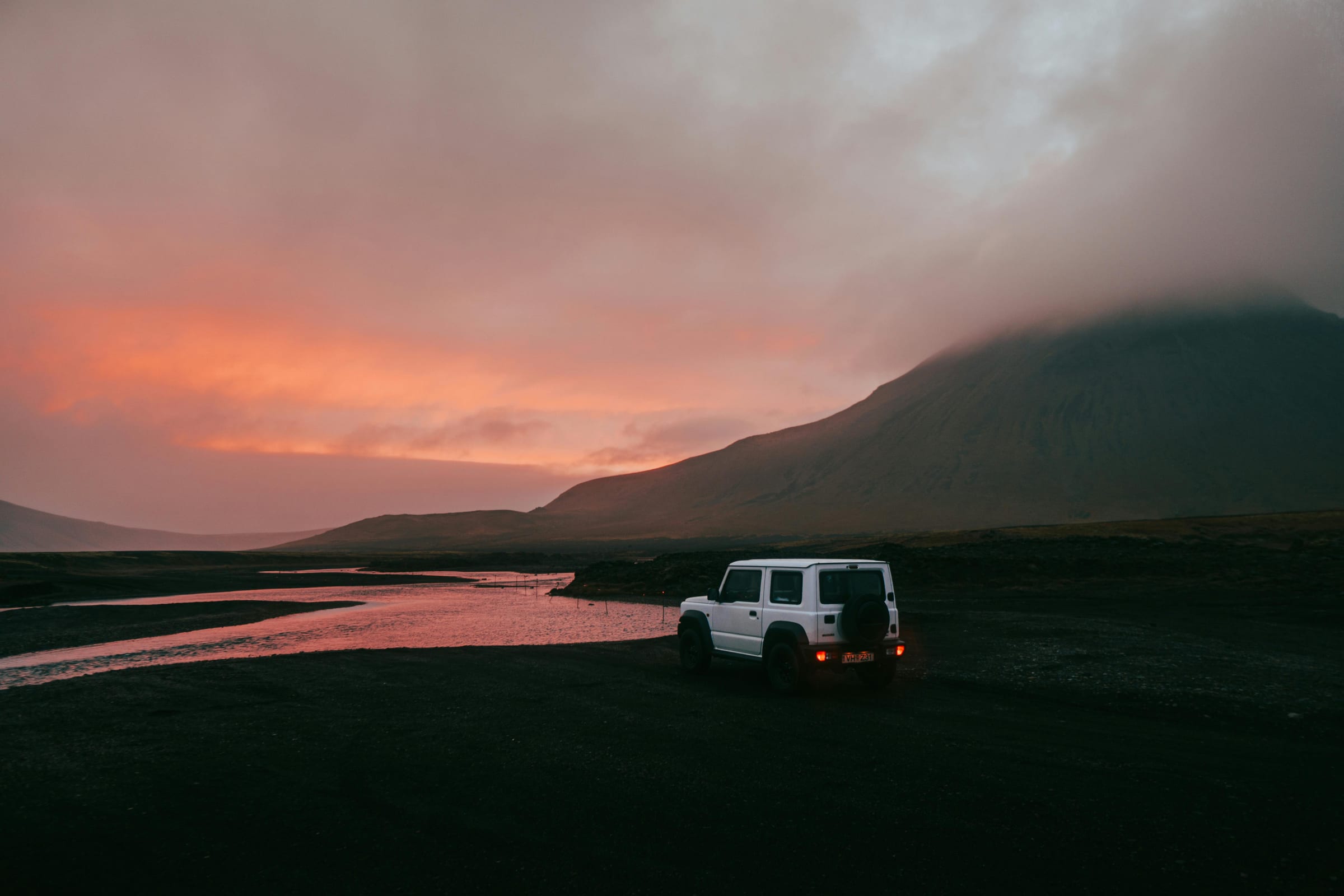
A 4WD vehicle is mandatory, and not just technically. The river crossings on many F-roads require meaningful ground clearance and actual four-wheel engagement, not just an AWD system optimised for light snow. A compact SUV that handles well in European weather is not the same as a vehicle built for unbridged Highland river fords.
If you plan to drive F-roads, book a purpose-built high-clearance 4WD from the start of your trip, confirm your rental agreement explicitly permits F-road use, and monitor road opening dates as your travel date approaches. Attempting a closed F-road is both dangerous and can void your insurance entirely.
The reward for getting this right is access to parts of Iceland that most visitors never reach, and which feel genuinely remote. A long weekend or dedicated two-day detour to Landmannalaugar, for example, changes the character of an Iceland trip substantially. It is worth pursuing if you have the time, the right vehicle, and reasonable experience.
Seasonal and Weather Tradeoffs
Iceland’s weather does not follow a predictable daily pattern, and this is not a cliche. It is a logistical fact. Conditions can shift from clear skies to near-zero visibility in minutes, particularly in coastal and highland areas. Strong crosswinds, which are more common than most visitors expect, are a genuine physical challenge when driving a high-profile vehicle on open roads.
Summer (June through August) offers the longest daylight hours, open F-roads, and the widest range of accessible terrain. It is also the most crowded period, with accommodations along the south coast and in Reykjavik booking out well in advance. Weather is more stable but not guaranteed.
Winter driving concentrates the experience on the Ring Road, which is maintained and mostly passable, but adds the challenge of ice, shorter days, and the possibility of road closures during severe storms. Winter visitors gain lower prices, smaller crowds, and the possibility of northern lights at night, but should expect to change plans on short notice and should carry emergency supplies in the car.
The shoulder seasons, particularly late April through May and September through October, offer a practical middle ground. Crowds thin, the landscape shifts dramatically with changing light, and costs moderate. Some highland roads begin opening in late May to early June, while September typically sees F-roads close again by mid-month.
Practical Planning Points Before You Book
A few decisions made before you arrive will shape the whole trip more than any in-country choice.
Choosing between a 2WD and a 4WD vehicle defines what roads are available to you. A 2WD is sufficient for a Ring Road trip in summer. A 4WD opens highland access and gives more margin in winter conditions.
Insurance coverage on Icelandic rentals involves multiple layers, including basic collision damage, gravel protection, sand and ash protection (relevant near active volcanic areas), and tyre coverage. The right combination depends on where you plan to go and what time of year.
Navigation deserves more preparation than most people give it. Cell service is unreliable in the interior and sparse on remote peninsulas. Downloading offline maps before leaving Reykjavik is a practical step. The Vegagerðin (Road Administration) app and website are the primary sources for current road status.
Finally, pace the trip honestly. Iceland rewards slowness. The drives that stay with people are rarely the ones spent racing between as many sites as possible. A week spent going deep into the south coast and Snæfellsnes will leave a clearer impression than a rushed loop of the full ring under time pressure.