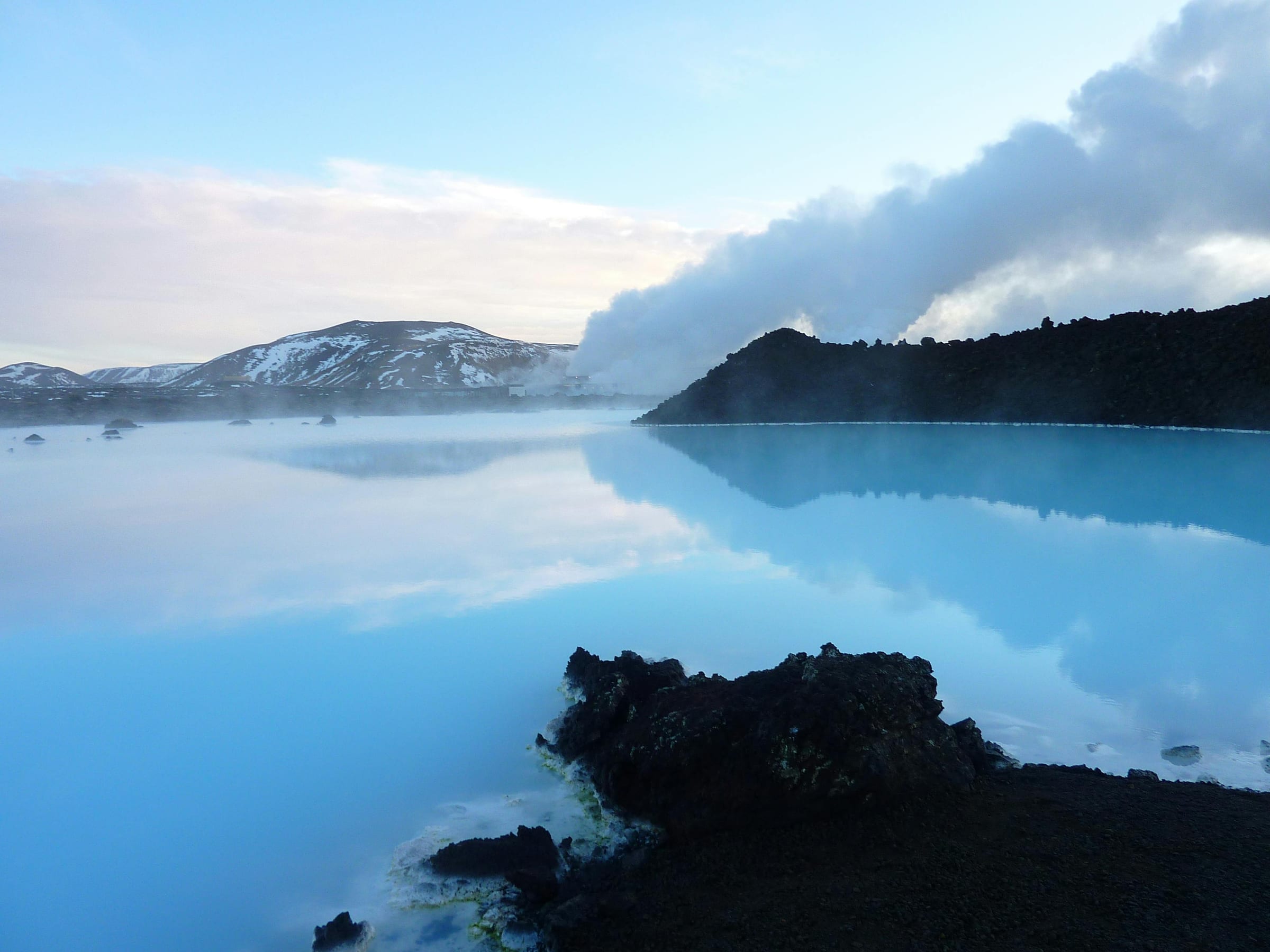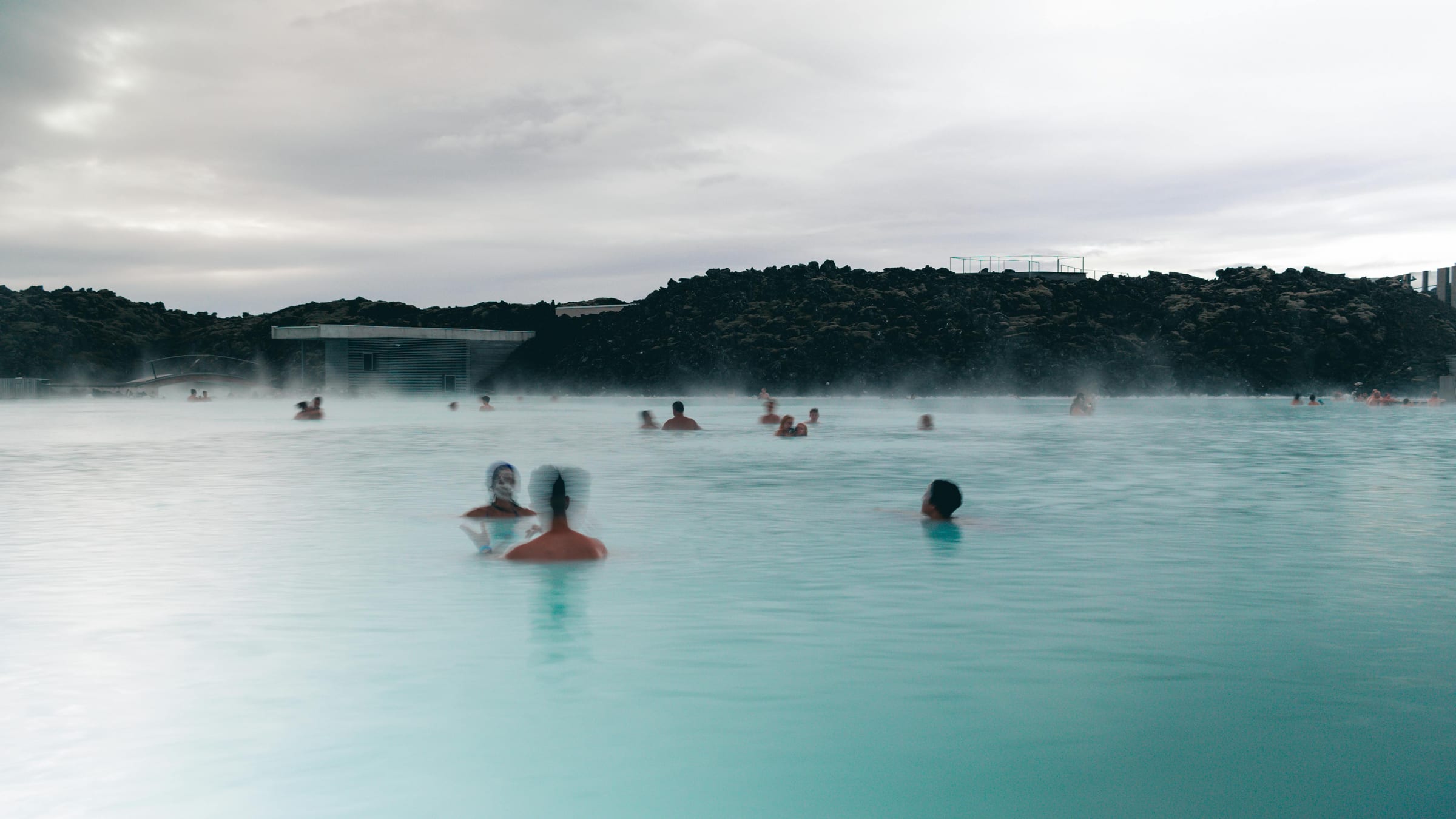
The Blue Lagoon is genuinely good, but it also costs a significant amount, requires advance booking, and sits in a crowd of tourists who arrived on the same shuttle from Reykjavik. Iceland has dozens of geothermal bathing options that are quieter, cheaper, and in many cases more atmospheric. Some are formal spa facilities with changing rooms and staff. Others are roadside concrete pools that local municipalities maintain for their communities. A few are wild, unimproved hot springs where you wade in wearing whatever you brought. Understanding the difference between these categories before you travel shapes how you plan, what you pack, and how much you spend.
Who This Guide Suits
This guide is most useful for visitors spending at least five to seven days in Iceland who want to build bathing stops into a broader itinerary rather than treating a single pool as the main attraction. It also suits travelers doing the Ring Road who want to know which pools are worth a detour and which ones are easy to combine with something else nearby. If you only have two or three days and are based in Reykjavik, the options near the capital are the most accessible, and the guide covers those first.
First-time visitors often underestimate how central swimming pools are to everyday Icelandic life. These are not tourist facilities in most cases. They are community pools used by locals before and after work, and the etiquette matters. Showering thoroughly without a swimsuit before entering the water is required and enforced. Arriving without knowing this will result in being turned back at the pool entrance. This applies to every public facility in Iceland, not just the famous ones.
Pools Near Reykjavik
Laugardalslaug
This is the largest public swimming pool in Reykjavik and the one most locals point to when asked where they actually swim. It has several hot pots at different temperatures, an outdoor pool, a steam room, and a waterslide. The setting is not dramatic in landscape terms, but it functions as an honest introduction to how Icelanders use geothermal water daily. It is worth going here early in a trip simply to calibrate your expectations. After Laugardalslaug, you have a reference point for everything else.
Sundhöll Reykjavikur
This is the oldest public pool in Reykjavik and has a different character from Laugardalslaug. It is smaller, more central, and has both indoor and outdoor sections. The outdoor section was added later and is where most people head. This pool tends to attract a slightly older crowd and a mix of locals and travelers who have done their research. It is very close to the main shopping street, which makes it an easy stop if you have an afternoon free in the city.
Along the South Coast and Golden Circle
Secret Lagoon (Gamla Laugin), Fludir
The Secret Lagoon is the most commonly cited alternative to the Blue Lagoon, and for good reason. It is the oldest swimming pool in Iceland, sits in a small village in the south of the country, and is surrounded by small geysers and bubbling hot spring activity that gives the setting genuine geothermal character. The water temperature is high enough to feel genuinely restorative even in cold weather. The facility is modest, which is part of the appeal. Changing rooms are functional but not luxurious.
Fludir is a reasonable detour on a Golden Circle loop, though it adds distance and time to a route that many visitors already find long for a single day. If you are planning the Golden Circle as a day trip from Reykjavik, consider whether you want to do it properly over two days, which allows you to include the Secret Lagoon without rushing everything else.
Fontana Geothermal Baths, Laugarvatn
Fontana sits on the edge of Lake Laugarvatn and draws water from springs directly beneath the building. The baths include hot pools, steam rooms that are fed by natural underground steam, and direct access to the cold lake for contrast bathing. The lake contrast option is worth doing if the air temperature is manageable for the walk between water and shore. The facility is more polished than the Secret Lagoon but less commercial in scale than the Blue Lagoon. It also fits naturally into a Golden Circle day since Laugarvatn is on the standard route.
The Ring Road: East, North, and Westfjords
Mývatn Nature Baths
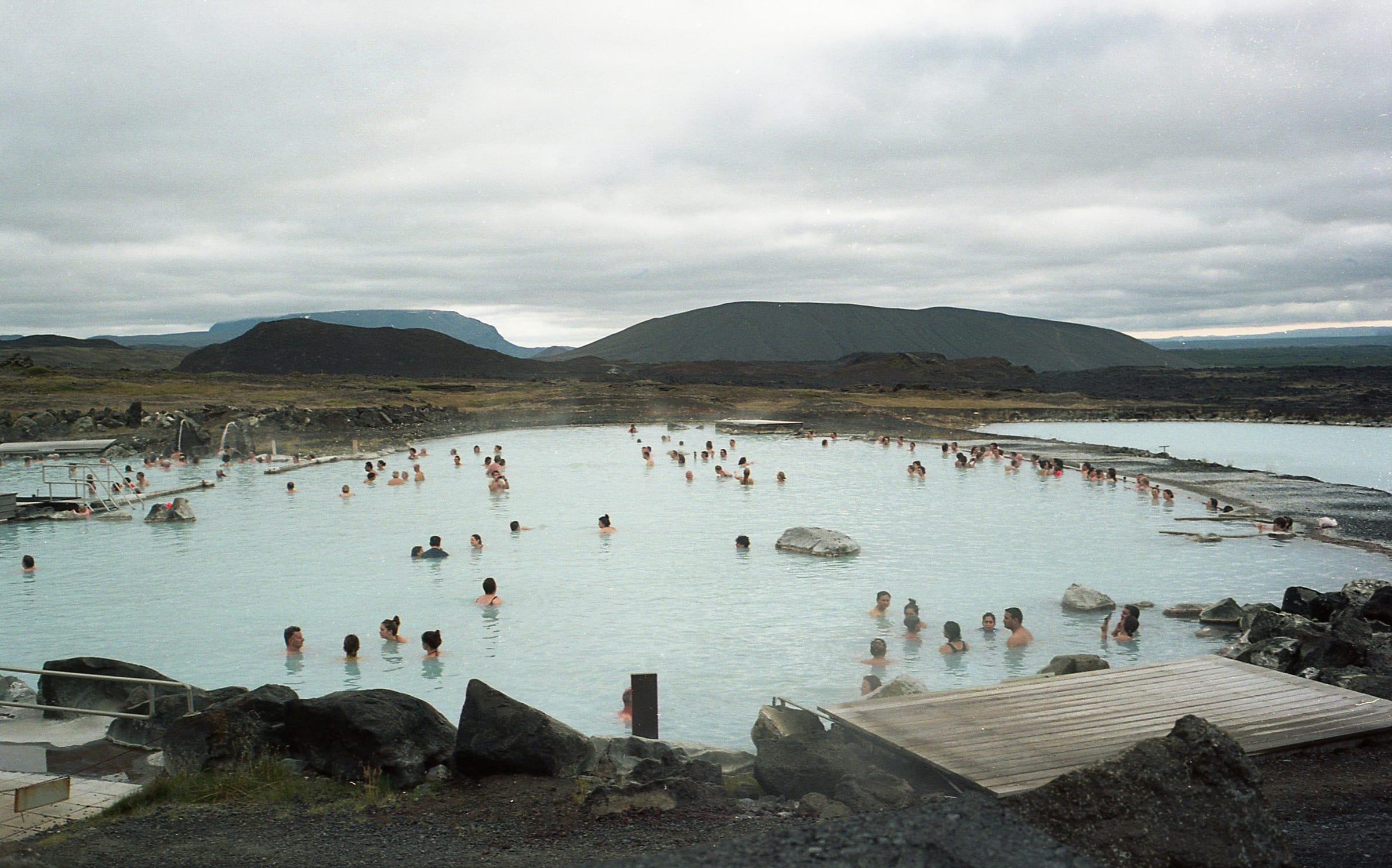
In the north of Iceland, the Mývatn area has its own geothermal bathing facility that draws comparisons to the Blue Lagoon because of its milky-blue water. The comparison is fair in visual terms, but the atmosphere is very different. Mývatn is genuinely remote. Getting there requires either driving the Ring Road or flying to Akureyri and driving further. The surrounding landscape of volcanic craters, pseudo-craters, and birdlife makes this area worth visiting regardless of the baths. The baths themselves are a good reason to stay in the Mývatn area for at least one night rather than passing through.
GeoSea, Husavik
Husavik is increasingly on the map for whale watching, and GeoSea is a spa facility built on cliffs above the harbor. Geothermal seawater fills the pools, and the view across the bay is the main attraction. The facility is relatively new by Icelandic standards and is deliberately designed for the view. It works best on clear days or in conditions where the light is doing something interesting, which in Iceland is fairly often. Husavik fits easily into a Ring Road itinerary if you are already planning to stop for whale watching.
Westfjords: Pollurinn and Hellulaug
The Westfjords reward visitors who are willing to drive significantly longer distances on slower roads. Pollurinn is a community hot pot near Talknafjordur that is small, free, and sits at the end of a short walk from the road. Hellulaug is a small natural pool near Flókalundur with views over a fjord. Both of these are the kind of facilities where you might be entirely alone, or you might find four or five other people. Neither has significant infrastructure. You bring a towel, change by the car or in minimal shelter, and get in. For some travelers this is exactly what they wanted from Iceland. For others it is not worth the added driving time the Westfjords require.
What to Prioritize When Time Is Short
If you have a week or less and you are doing a standard south coast and Golden Circle itinerary, the clearest choices are Fontana or the Secret Lagoon rather than both, since they serve a similar function and are not far apart. Save room in your itinerary for at least one local municipal pool in Reykjavik, because the experience of sitting in a hot pot next to locals who are using it as a regular part of their day is genuinely different from any tourist facility, regardless of quality.
If you are doing the full Ring Road over ten to fourteen days, Mývatn Nature Baths are worth planning around rather than fitting in as an afterthought. Book in advance during summer, when the north sees more visitors than the facilities are designed for.
Seasonal and Driving Tradeoffs
Winter bathing has a specific appeal because the contrast between cold air and hot water is extreme, and northern lights visibility is possible from outdoor pools on clear nights. The tradeoff is that road conditions between October and April can make some facilities harder to reach safely, particularly in the Westfjords and in highland areas. Stick to paved roads and check road condition updates through the official Icelandic road authority before any significant drive.
Summer gives you easier driving and long daylight hours, but the most popular facilities fill up. Arriving early in the morning or in the evening tends to mean smaller crowds at all but the most famous spots.
Practical Planning Tips
- Bring a towel for every pool you plan to visit. Some facilities rent or sell them, but not all do.
- A compact dry bag or lightweight backpack makes carrying wet gear between stops significantly easier.
- For free or minimally managed natural pools, leave the site exactly as you found it. These spots persist because people treat them well.
- Booking in advance applies to the Blue Lagoon, Mývatn Nature Baths, and GeoSea during peak season. Municipal pools and smaller facilities generally do not require bookings.
- Budget travelers can get most of the geothermal bathing experience they want through municipal pools and a handful of free natural spots. The premium facilities are worthwhile but not essential to a good Iceland trip.